
STORIES > NETHERLANDS > ROTTERDAM > ARTICLE
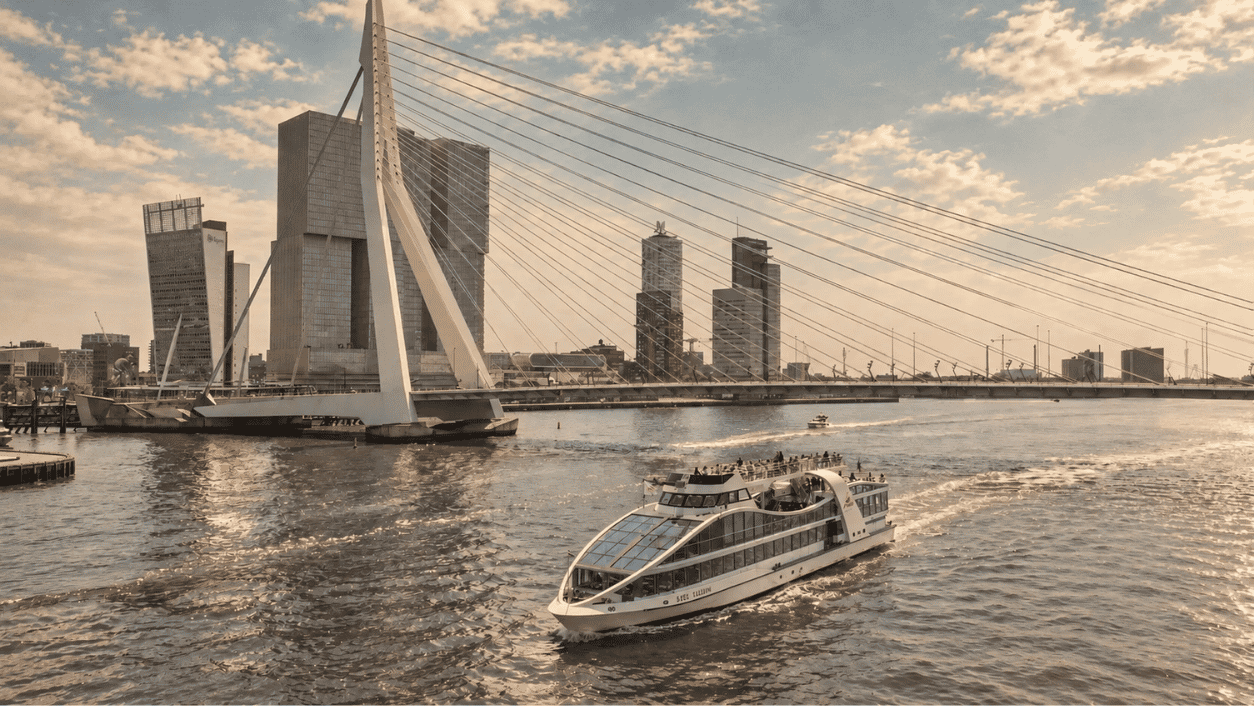
ROTTERDAM: THE PHOENIX OF THE MAAS
A personal journey through Rotterdam, a city that transformed the ruins of war into a bold architectural landscape. From the Brandgrens to the Maas, its surviving history, creative spirit and constant reinvention reveal a city that chose to build forward rather than look back.
The first time I saw Rotterdam, I was looking for the wrong thing.
I'd already fallen for the Netherlands the way most visitors do — through Amsterdam's leaning gabled houses, through the kind of postcard prettiness that makes you want to slow your footsteps on a canal bridge just to look a little longer. So when Edwin, my Dutch boyfriend, took me to Rotterdam by car from Krimpen aan den IJssel, I expected some version of that. Instead, the skyline came up to meet us — glass towers, wide grey boulevards, a silhouette that looked assembled by someone with no interest in following the Dutch script. I asked, half laughing, where all the old buildings had gone.
“There aren't many,” he said. “That's the point.”
It took me the rest of the trip, and a few more visits after it, to understand what he meant that on 14 May 1940, German bombers reduced much of Rotterdam's historic centre to rubble. Coming from Yogyakarta, I was familiar with a city that also carries its past through layers of loss and reinvention. Earthquakes, war, changing times and the growth of the city have erased parts of what came before, while new houses, businesses and neighbourhoods have gradually grown over or around those absences. The result can be beautiful, but it can also be messy and organic — history, everyday life and new construction constantly negotiating for space. Rotterdam had also built a new city over the ruins of the old one, but here the transformation was deliberate: the empty spaces left by the bombing became part of a conscious plan, and the unusual buildings that followed were expressions of a city deliberately experimenting with what it could become.
The fire that made the city
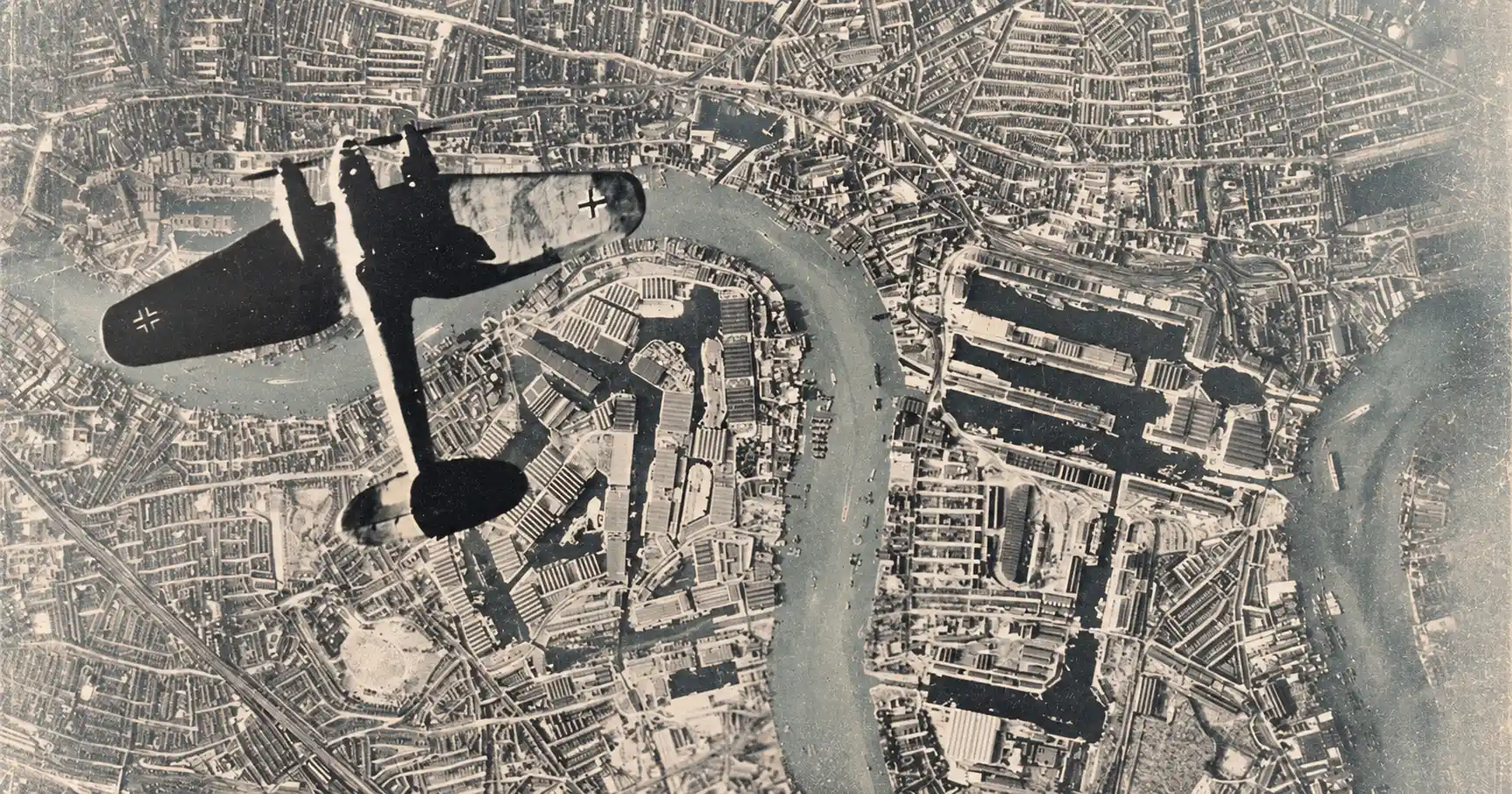
Nazi bomber plane
Edwin showed me the line before he showed me any of the famous buildings — a series of small markers set into the pavement, easy to miss unless someone points them out. He stopped mid-sentence and planted his foot on one.
“This is where the fire stopped,” he said.
The Brandgrens, or Fire Boundary, traces the outline of the area destroyed in 1940. It is marked by a continuous line of glowing, red-lit icons embedded directly into the pavement. That devastating events killed at least 800 people and around 80,000 were left homeless. Whole neighbourhoods — bakeries, churches, shops and the ordinary architecture of daily life — simply stopped existing. Standing on the line itself is a different kind of knowing than reading about it.
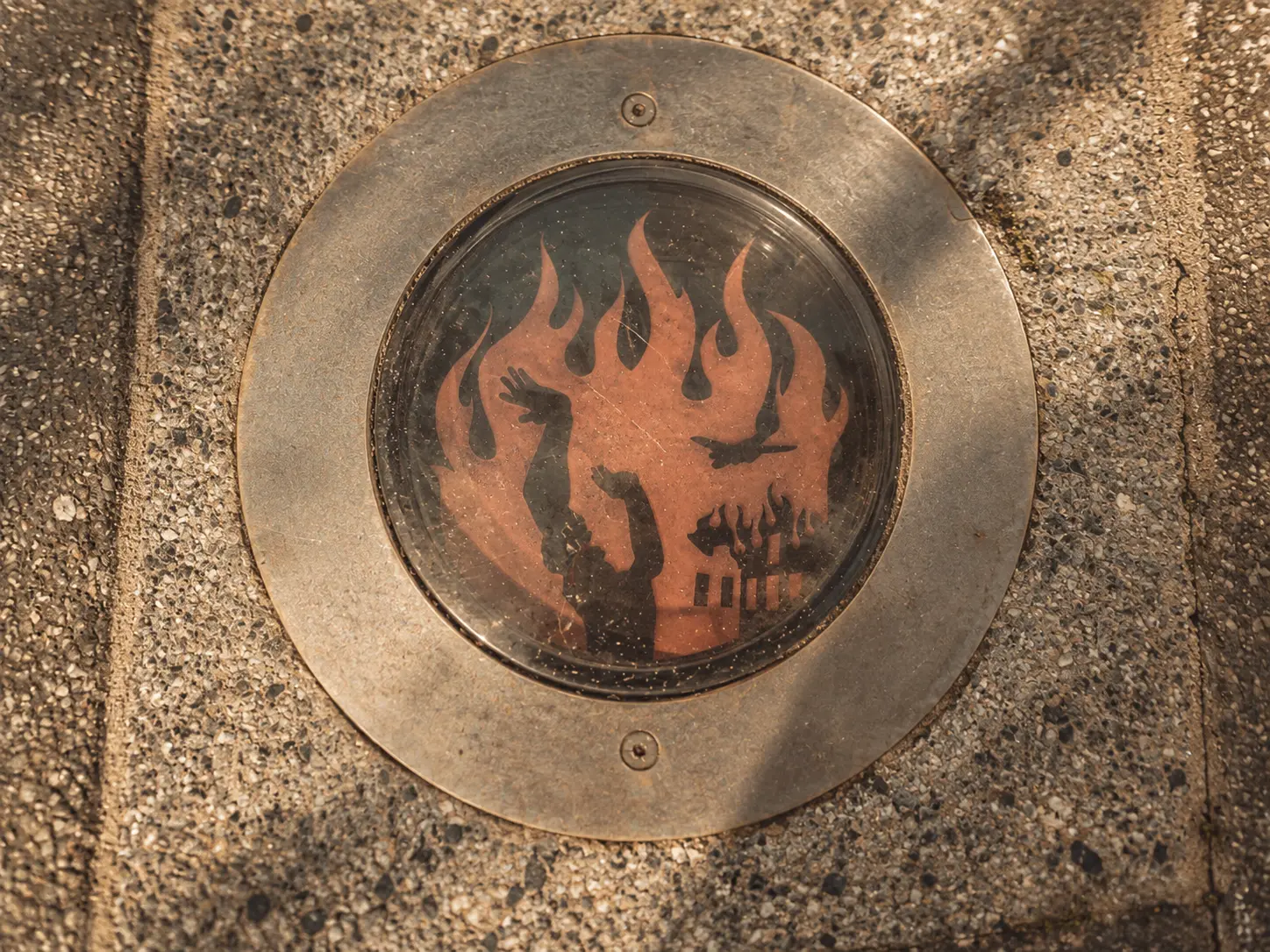
The Brandgrens Pavement Marker
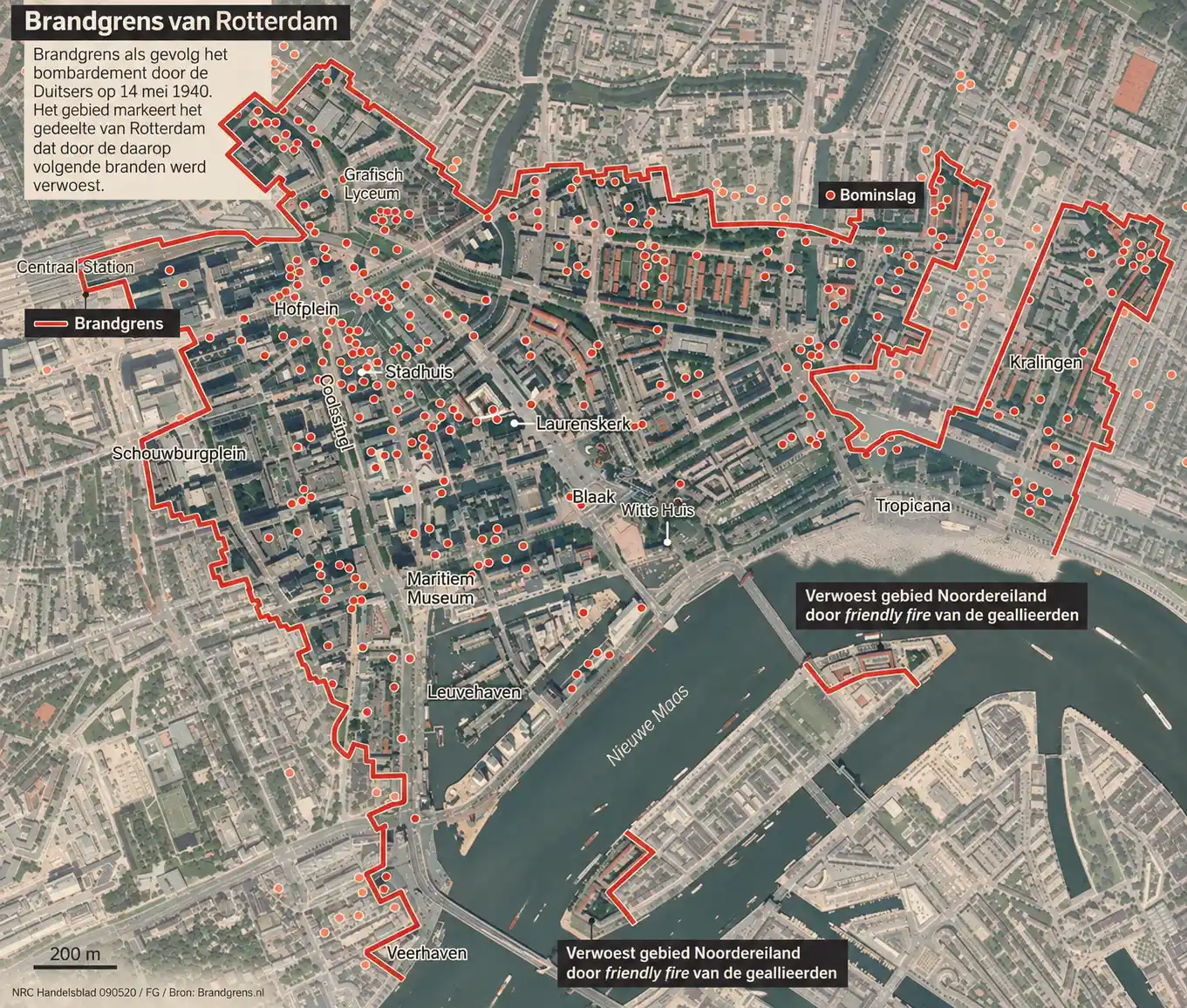
The Brandgrens, The Fire Boundary of the bombed area
What happened next is the part most visitors don't expect. Rather than reconstructing the old medieval tangle of streets, planners eventually developed the Basisplan and chose something radical instead: light, air, wide roads and a clean break from what had burned. Edwin keeps a shelf of Rotterdam books at home — old sepia photography collections next to glossy new architecture monographs — and flipping between them is like watching the same 258 hectares of land change its mind twice: first reduced to rubble, then rebuilt into something entirely new.
The Architecture of Resilience
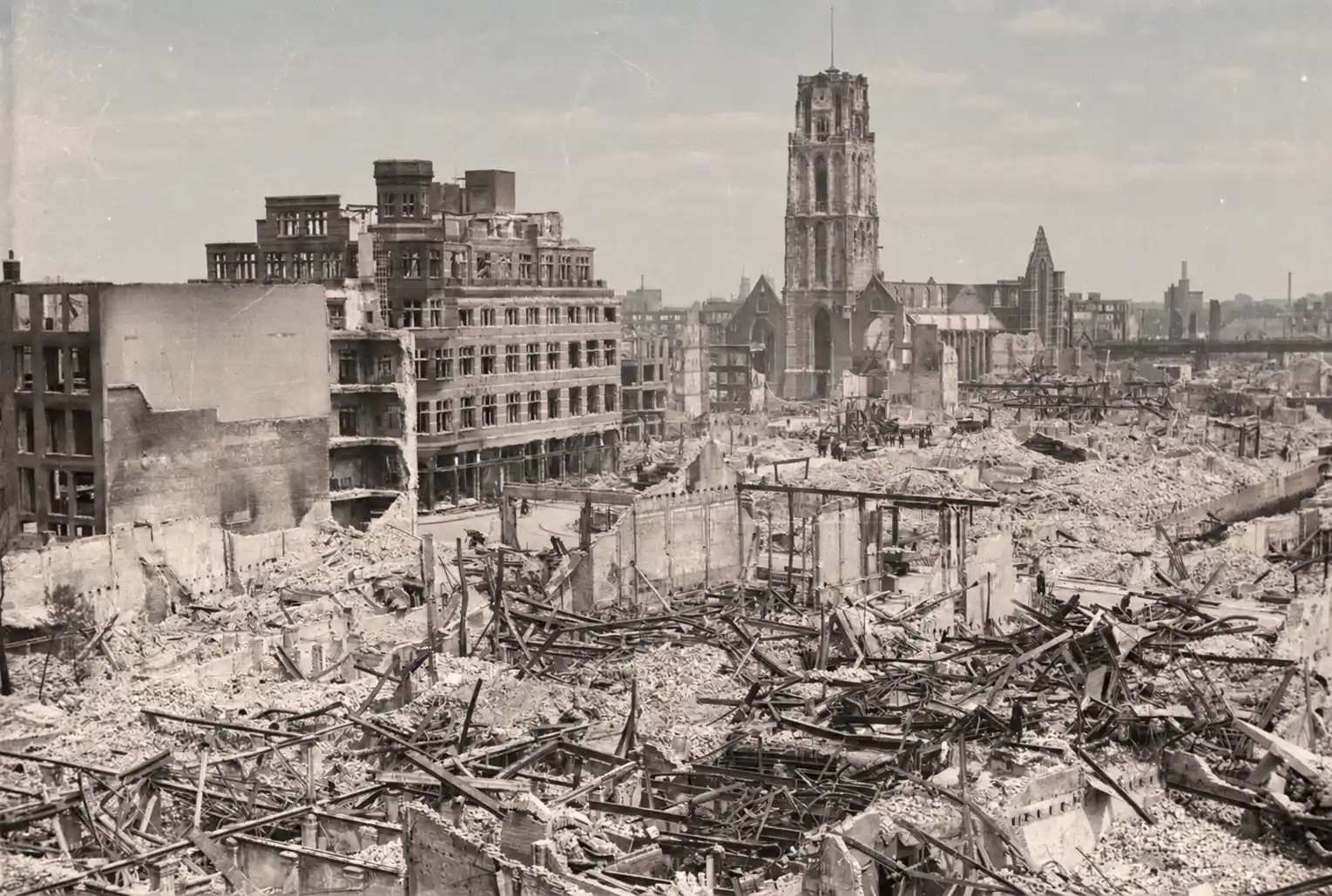
St. Lawrence Church stood among the ruins
Not everything vanished, and the survivors carry a different kind of weight for it.
The Laurenskerk, a medieval church badly damaged in the bombing, was pieced back together over the following decades. Standing beside it now, surrounded by architecture that couldn't have existed before the war, it feels less like a church and more like a witness: the one old face in a room otherwise full of glass. Rotterdam's City Hall survived too, damaged but standing, its formality now looking almost deliberately out of place among its neighbours. These buildings are proof that the old city is still down there somewhere, folded into the new one rather than completely erased by it.
Building a new language
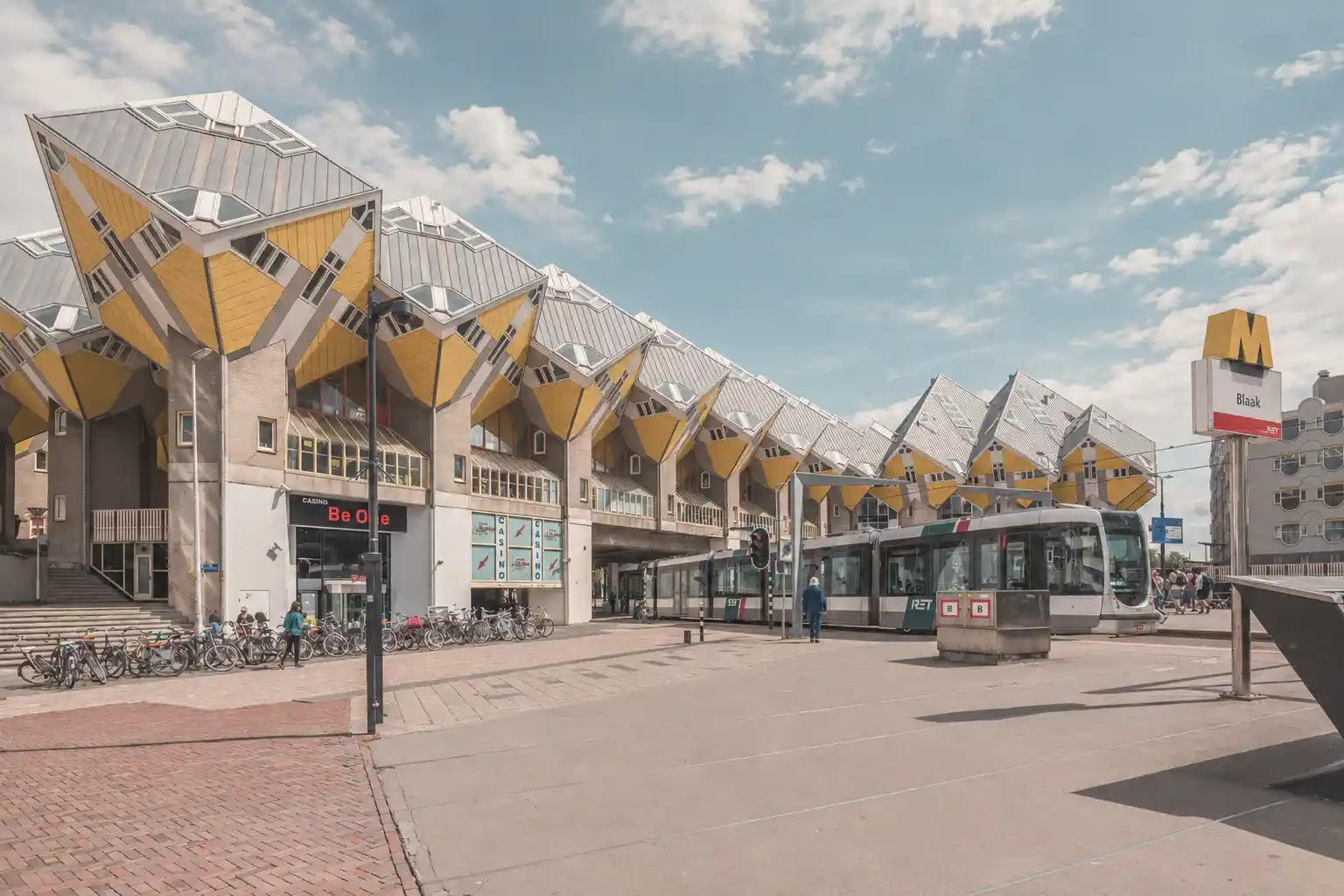
Cube Houses
What followed was the new city working out its own vocabulary, one building at a time.
The Lijnbaan, opened in 1953, was one of the first fully pedestrian shopping streets in Europe, an idea so novel that other cities sent planners to study it. It set a tone Rotterdam never really abandoned: try something new, worry about precedent later. That instinct eventually gave rise to the Cube Houses, Piet Blom’s bright yellow homes tilted at 45-degree angles above the street. Rather than resembling a conventional residential complex, they look more like giant dice that rolled halfway and stopped, and then people simply decided to live inside them. It also produced the Markthal, its vast mural-painted ceiling arching over the market stalls like an enormous indoor cathedral. And it produced the Erasmus Bridge, its single asymmetrical pylon rising over the Maas and linking two halves of a city that clearly enjoys arguing with itself.
There's no single “Rotterdam style,” and the longer I spent there, the more that felt like the actual point. An OMA architect once described the city, fondly, as “the mess that is Rotterdam.” A city that refuses to settle on one identity leaves room for every generation to leave a mark that doesn't have to match the one before it.
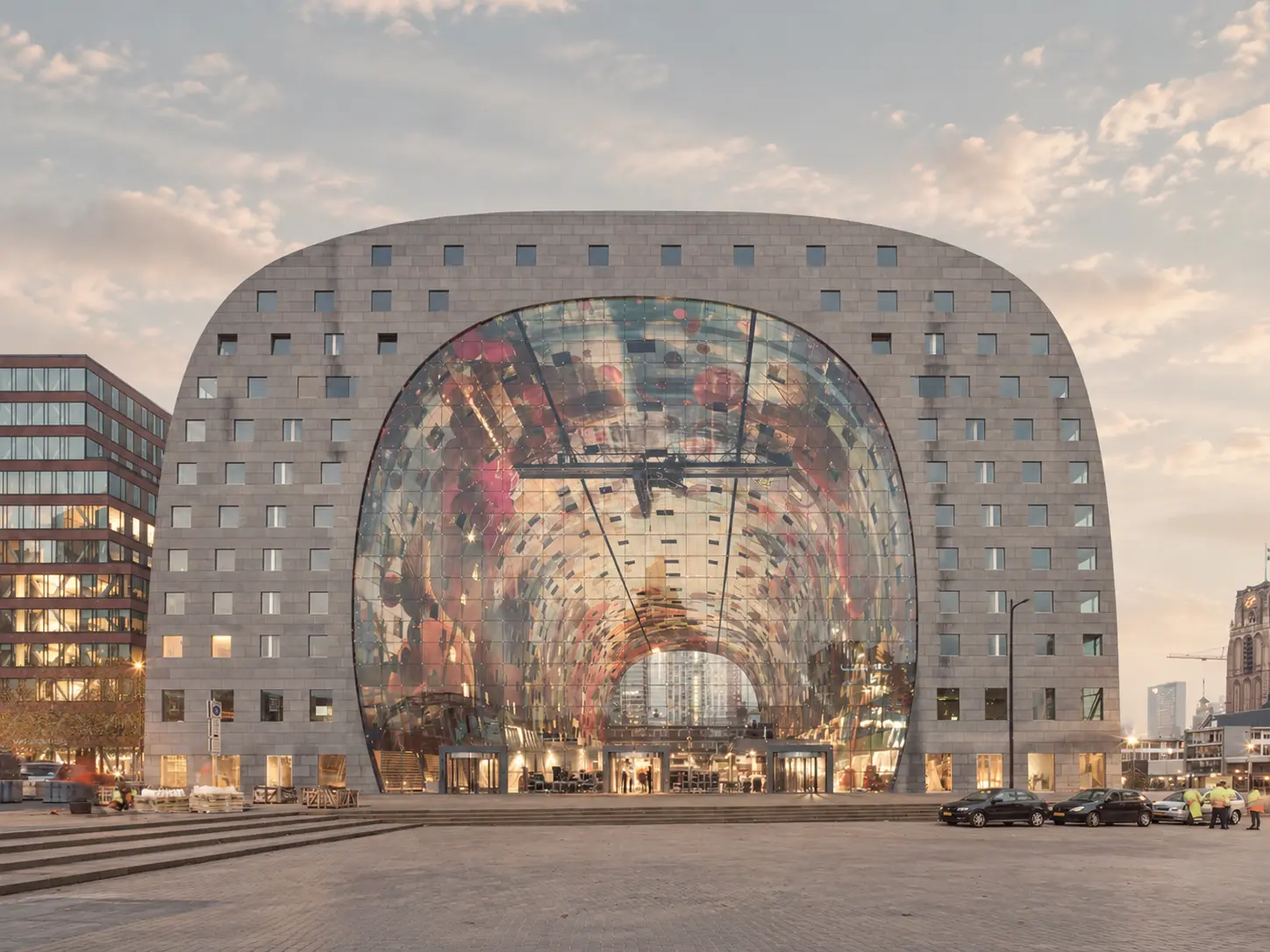
Market Hall
Above and along the water
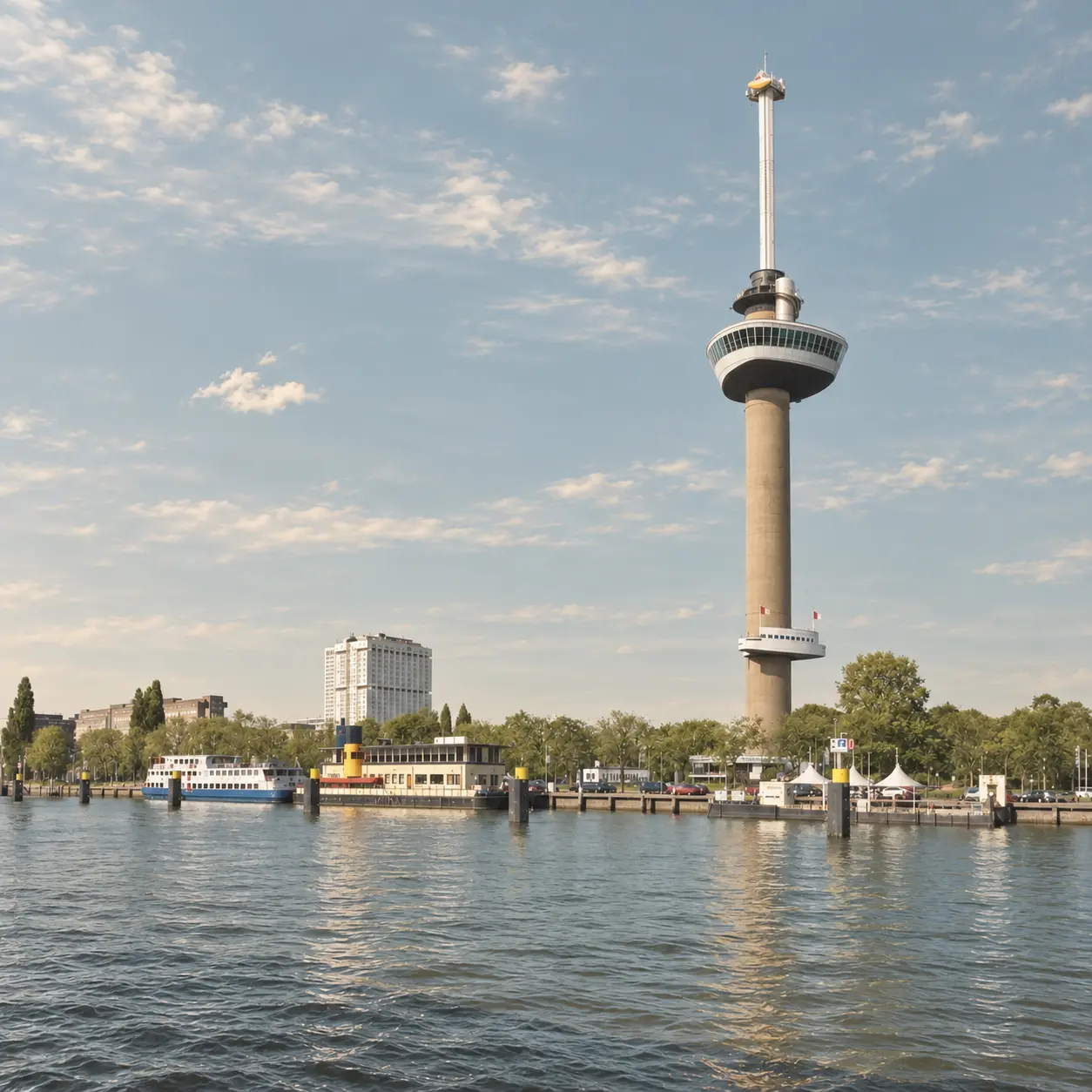
Euromast
Rotterdam makes more sense once you've seen it from a height and from the water, and Edwin took me to both.
The Euromast gave me the first view that made the whole layout click into place — the towers, the harbour, the Maas cutting the city cleanly in two. A Spido boat tour through the working port did something similar from the water, turning the abstract idea of one of Europe's busiest harbours into an overwhelming landscape of cranes and container ships.
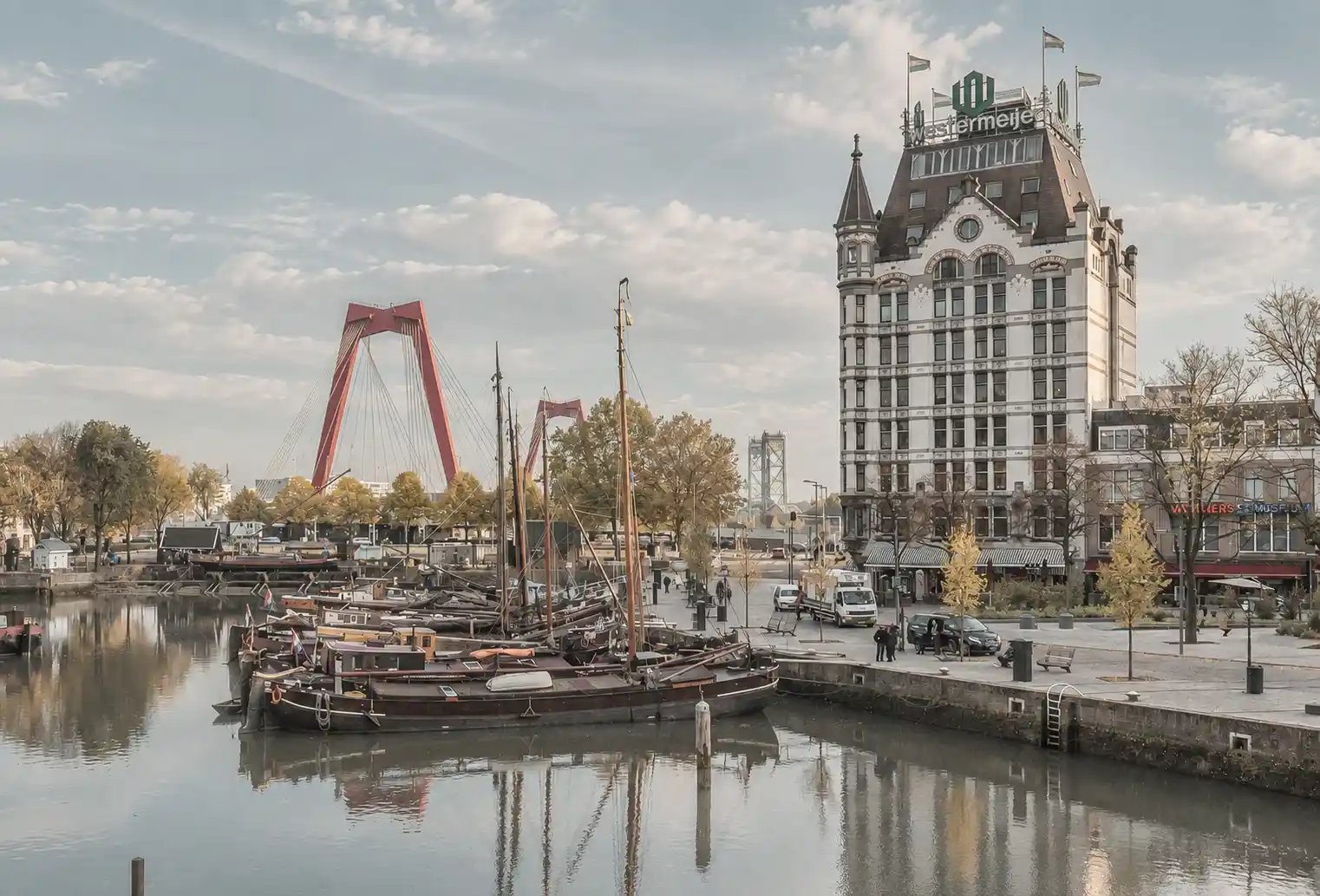
Oude Haven
Back on land, the Oude Haven showed another side of Rotterdam's relationship with change. Its historic sailing ships now sit beside bars and restaurants rather than warehouses, a reminder of how the city gives old places new lives. Nearby, the Maritime Museum traces the harbour's history, while further along, in Museumpark, the Depot Boijmans Van Beuningen — an extraordinary mirrored bowl of a building and the world's first publicly accessible art storage depot — reflects the surrounding skyline back at you in curved fragments.
A city you can taste

Babi panggang - Netherland's style
The strangest, most delightful disorientation came at the table. Edwin took me to a few of the city's Chinese-Indisch restaurants — a distinctly Dutch culinary hybrid shaped by decades of migration and colonial history, where Chinese techniques meet Indonesian flavours and are filtered through a Dutch kitchen.
For an Indonesian, encountering this cuisine in Rotterdam can feel like meeting something familiar that has travelled a long way and changed along the way. Dishes such as babi pangang and foe yong hai are recognisably connected to Indonesian and Chinese culinary traditions, yet their sweeter, richer and distinctly Dutch-Indisch interpretations can feel quite different from what one might encounter in Indonesia. The result is neither entirely Indonesian nor entirely Dutch, but something that has developed its own identity.
It felt like a smaller, edible version of what Rotterdam does architecturally — taking familiar pieces from different places and rebuilding them into something entirely its own.
Nightfall adds another layer. Small cafés turn into bars, and the streets around the centre feel young and restless, as if the city is still deciding what it wants to be.
A Place to wander and imagine
Not every visit to Rotterdam was with Edwin. On one of my later trips, I made my own way from Krimpen aan den IJssel by Waterbus, crossing the Maas towards the city. This time, I wasn't following a list of places to see. I was meeting two artist friends, and the city became the setting for a very different kind of day.
One is an animator who also works with performance and dance; the other is a multimedia artist. We didn't have a particular destination in mind. Sometimes we simply sat beside the river, watching boats pass while talking about our projects and ideas we might collaborate on someday. Other times, we'd wander into a nearby museum or exhibition just because something caught our attention.
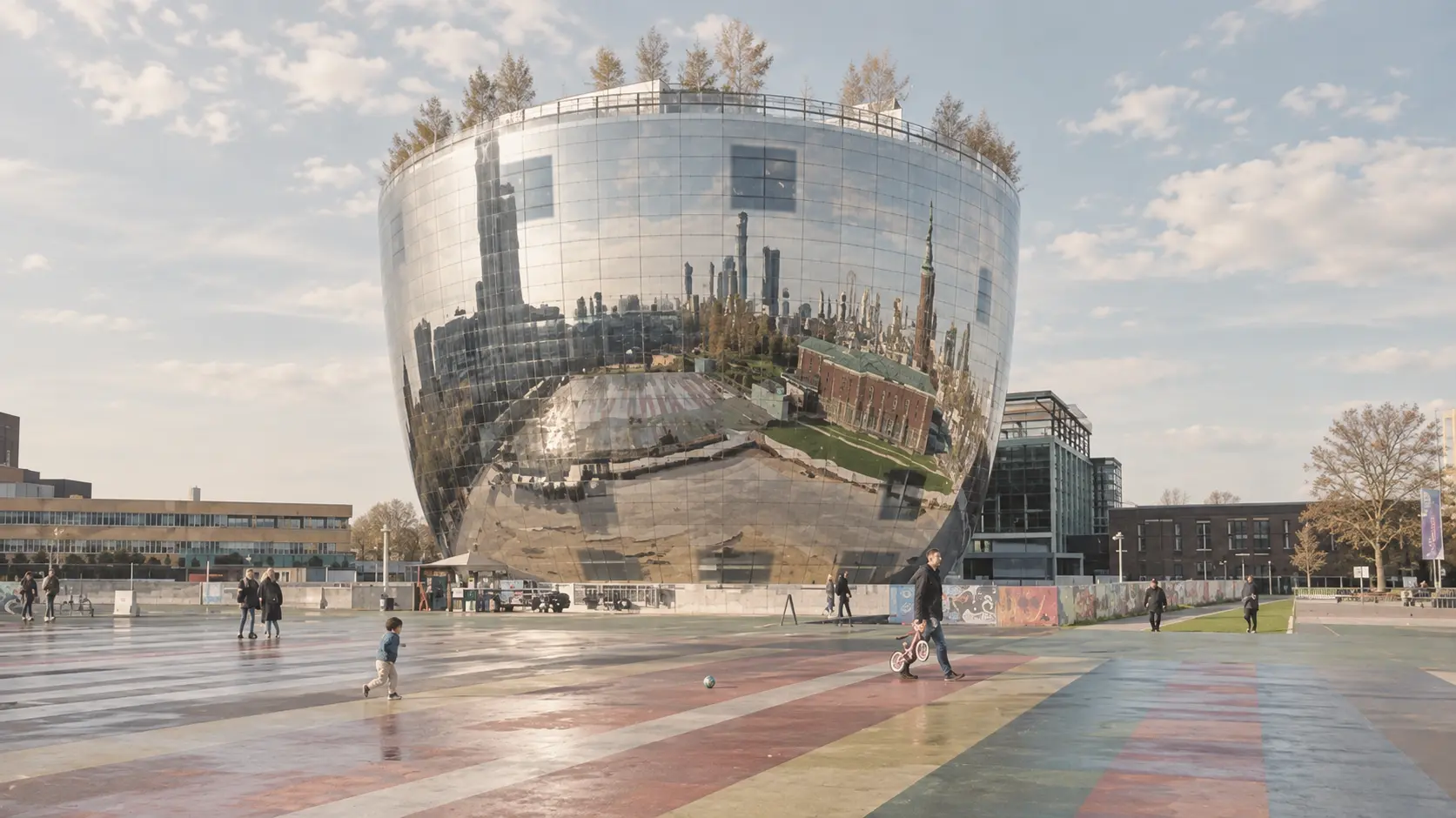
Depot Boijmans
There was something about Rotterdam that seemed to encourage those conversations. Its bold architecture, industrial edges and ever-changing cityscape gave us plenty to look at and talk about. We weren't there to tick off sights; we were there to exchange ideas, imagine possibilities and enjoy the city's creative energy. In those moments, Rotterdam felt less like a destination and more like an open studio — a place where ideas could wander as freely as we did.
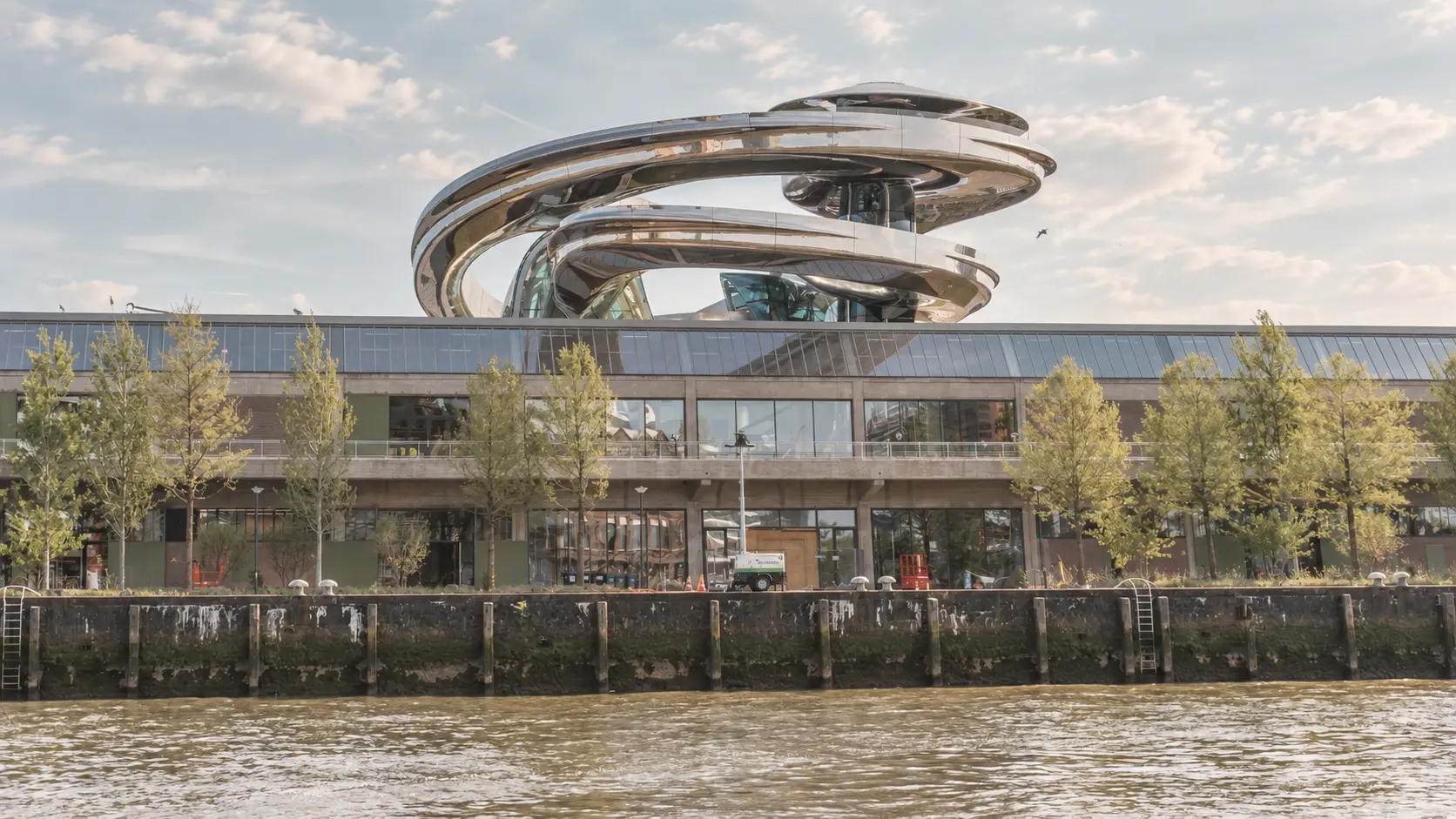
Fenix Migration Museum
Home, by bike and water
One of my favourite journeys back is by Waterbus, watching Rotterdam slowly recede behind me as I travel towards Krimpen aan den IJssel. The towers become smaller, the skyline softens, and the river opens out into quieter water. It's a short crossing, but it always feels like decompression — from the deliberate, engineered newness of the centre into something smaller and more ordinary.
I didn't grow up here, and I'll never have a local's instinct for which street used to be rubble and which one was always standing. But I've crossed the Brandgrens enough times now, in different seasons and in different ways, that I've started to feel the boundary myself — not as a tourist reading a plaque, but as someone who has slowly come to understand how deeply the past is woven into this city, and how deliberately Rotterdam has chosen what to carry forward.
Rotterdam never tried to look like it wasn't broken once. It just decided that wasn't going to be the end of the story.
CONTRIBUTOR / STORY AUTHOR
DETI LUCARA
WWC-26-000010Yogyakarta, Indonesia
Travel writer and founder of Where We Crossed, documenting places, people, and stories through slow travel.
COMMENTS & REFLECTIONS
0 Comment(s)WANT TO JOIN THE CONVERSATION?
Sign in with your member passport to share your reflections on this archive.
No reflections recorded yet. Be the first to share your thoughts on this story.