
STORIES > INDONESIA > YOGYAKARTA > ARTICLE
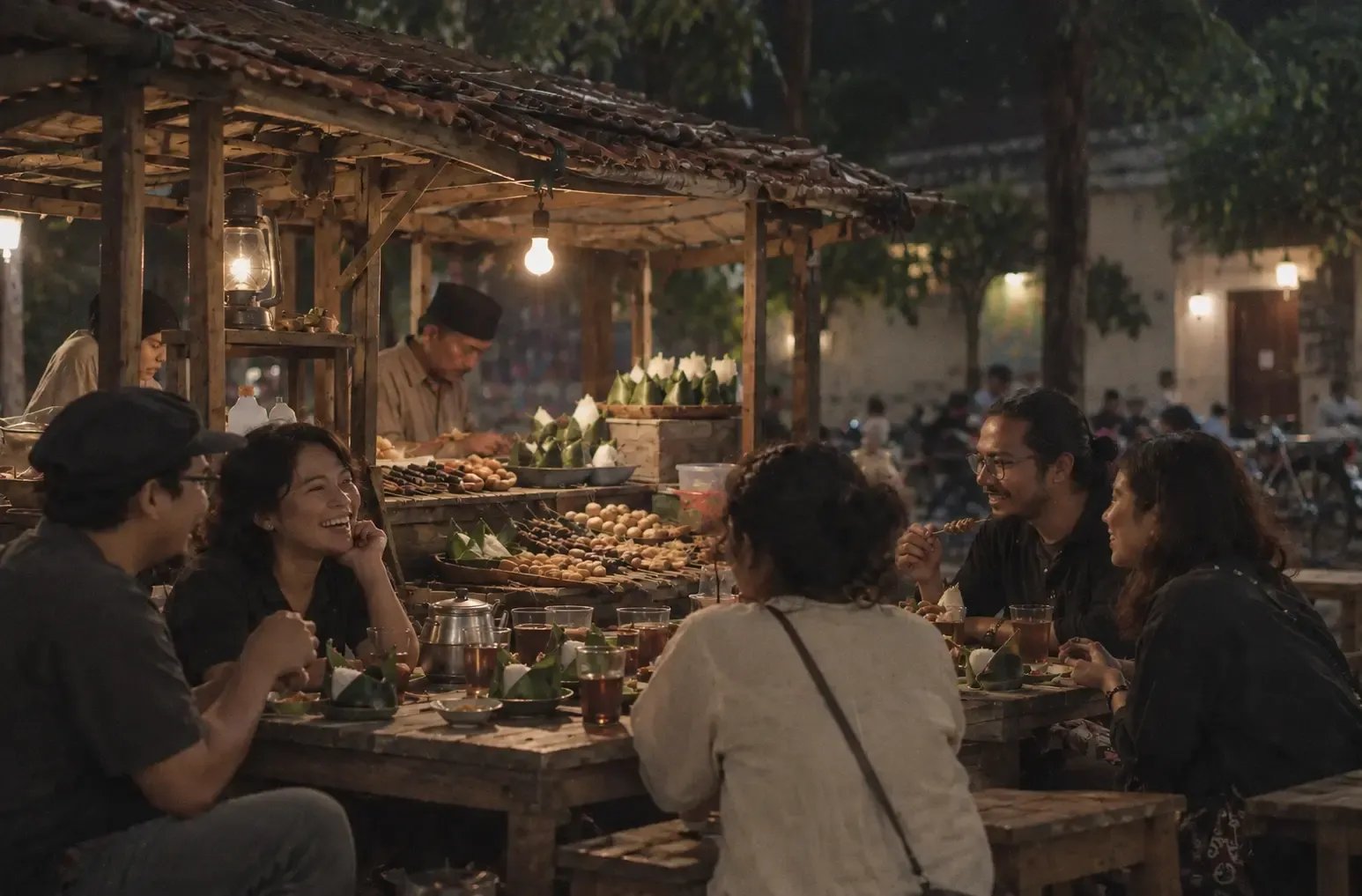
YOGYAKARTA: ROOTS & BELONGING
A story of the hometown that shaped me: Yogyakarta, where royal traditions, resistance, and revolution have left their mark on everyday life. Beneath its gentle warmth lies a city of contrasts — from the Kraton and Kauman to quiet kampung and gamelan-filled joglo. This is an exploration of the layers beneath the city I know, where history, resilience, and everyday life live side by side.
I grew up in Yogyakarta or Jogja, and it has always been home to me. But I have left the city many times.
I have lived in other Indonesian cities, travelled overseas, and spent enough time in unfamiliar places to learn that the world is much larger than the streets where I grew up. I have slept in rooms where I could not understand the language outside the window, navigated foreign train stations, and learned how to make temporary homes in places that once felt completely unfamiliar.
And yet, whenever I return to Jogja, something in me becomes quieter.
The streets feel familiar without asking anything of me. The sound of a passing motorbike, the smell of food from a neighbourhood warung, the softness of Javanese speech, even the way someone casually asks “Badhe tindak pundi?” — where are you going? — feels like a conversation that began years ago and simply continued while I was away.
This is the strange thing about home. Sometimes you only understand what it means after you have left it.
Growing up in Jogja, I never thought of the city as particularly extraordinary. The things visitors come here to discover were simply part of the landscape of my childhood. Javanese customs were not heritage. Gamelan was not a cultural performance. It was something I was expected to learn.
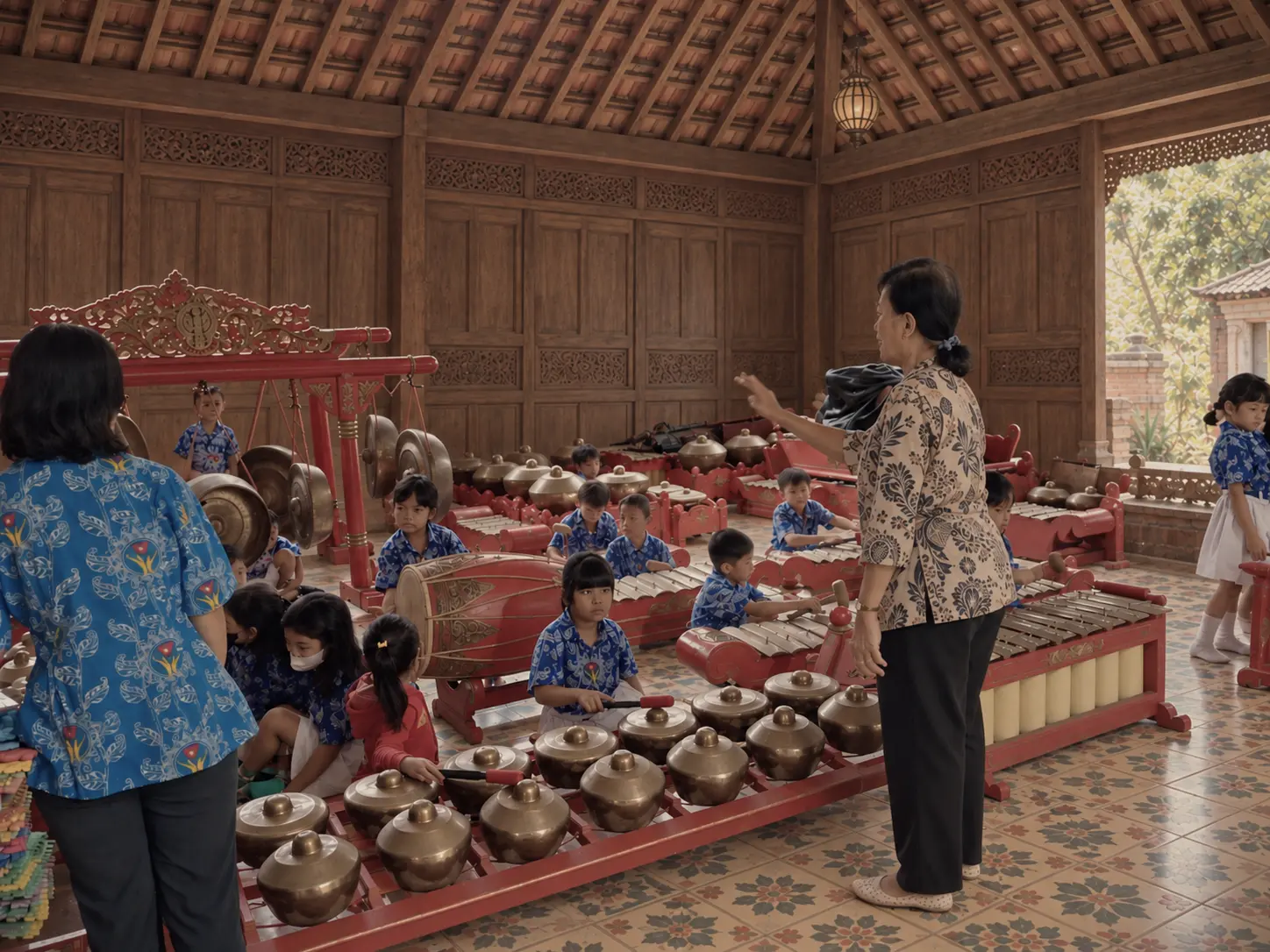
My mother teaches gamelan for children
In my big family, children traditionally learned gamelan, nembang — Javanese singing — and sometimes traditional dance. I learned them too, and I can still play gamelan today. My grandparents owned a complete set, and their joglo was large enough to hold the instruments. Gamelan was never something I encountered only on a stage. It was in the house, part of family life.
In many kampung around Jogja, it was part of neighbourhood life too. A community might own a gamelan set as a shared asset, with musicians gathering regularly to rehearse. Some families had their own instruments at home. You could hear the music drifting through a neighbourhood without knowing exactly where it came from.
Only after travelling elsewhere did I begin to understand how unusual that was.
And that is where I should begin telling the story of Jogja: not with the palace, or even the temples, but with the idea that here, history is rarely something kept behind glass. It is something people continue to practise.
A city older than itself
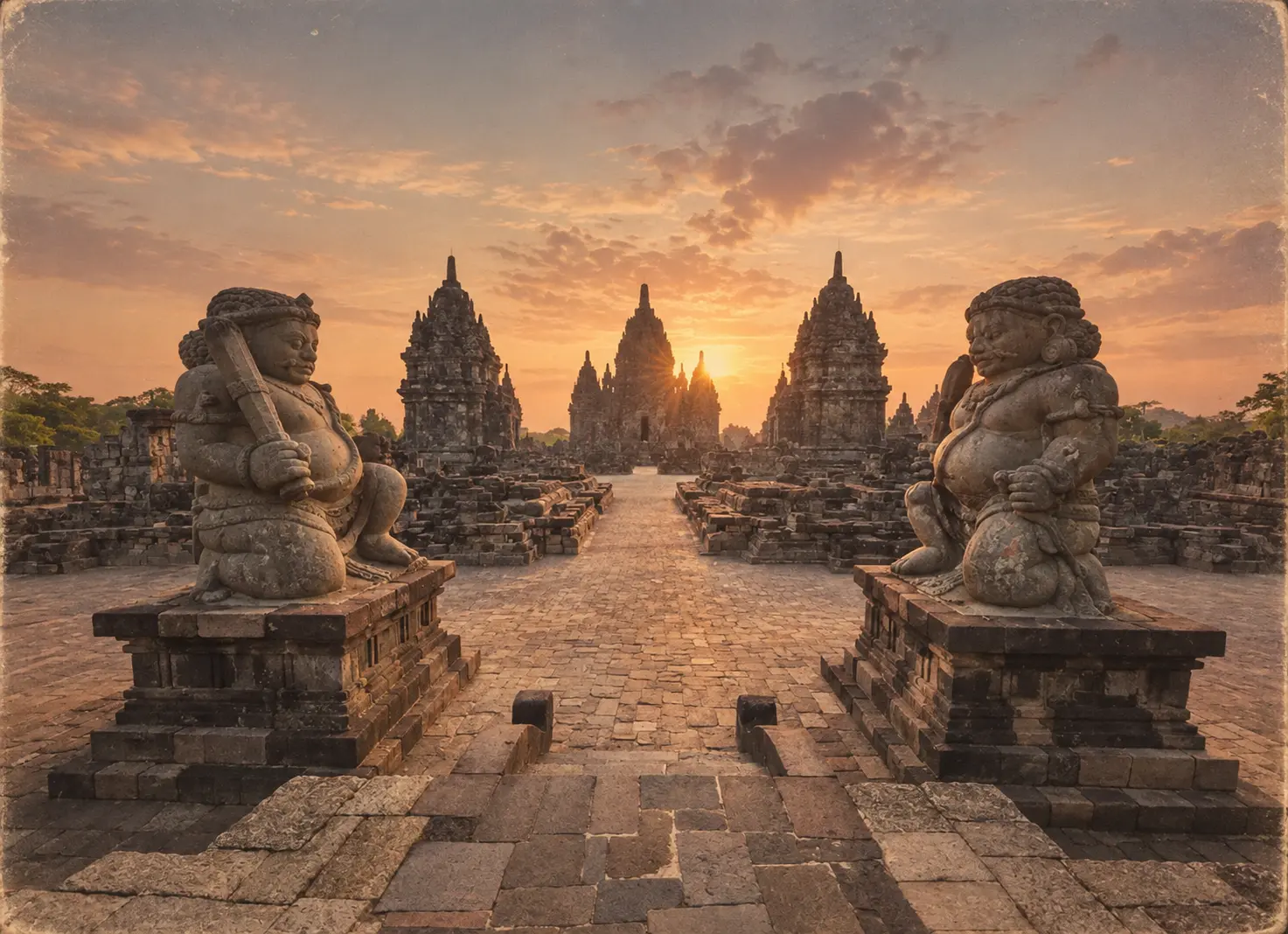
Prambanan temple complex
Yogyakarta looks, at first, like a city of the eighteenth century: the Kraton, the Malioboro axis, old kampung, royal traditions and the architecture of the Sultanate.
But the landscape around it is much older.
Drive east and you encounter Prambanan, the great ninth-century Hindu temple complex, with Sewu, one of Indonesia’s largest Buddhist temple complexes, beside it. Further west stands Borobudur. Together, they remind us that the civilisation surrounding present-day Yogyakarta was already sophisticated centuries before the modern city existed.
Even the philosophy of today's Yogyakarta reaches beyond the Sultanate. UNESCO describes the city's cosmological tradition as the result of centuries of interaction among indigenous Javanese beliefs, Hinduism, Buddhism, Sufi Islam and later Western influences.
That is why I find the word “heritage” slightly inadequate for Jogja. The city is not sitting on top of one history. It is sitting on many.
A kingdom divided
The Yogyakarta I know began taking its present form in 1755, after the Treaty of Giyanti divided the Mataram kingdom between Pangeran Mangkubumi, who became Sultan Hamengku Buwono I and established Yogyakarta, and Pakubuwono III, whose court remained in Surakarta. The VOC was deeply involved in the political struggle surrounding the division.
It is easy to tell this story as the birth of two neighbouring royal cities — Jogja and Solo — but the division changed more than a political map. Yogyakarta and Surakarta developed distinct court traditions and identities while sharing deeper Javanese cultural roots.
Under Hamengku Buwono I, Yogyakarta was deliberately constructed according to a cosmological vision. Its axis connected Mount Merapi in the north with the Indian Ocean in the south, with the Kraton at its centre. Tugu, Malioboro, Beringharjo, the Kraton, the Great Mosque, Tamansari and Panggung Krapyak became parts of a landscape expressing ideas about the relationship between human beings, nature and the divine. UNESCO inscribed the Cosmological Axis of Yogyakarta as a World Heritage site in 2023.
For a traveller, you can still walk through that idea. Start at Tugu and walk south along Malioboro. Pass Beringharjo Market, continue towards the Kraton and Kauman, then explore Tamansari and the surrounding kampung rather than treating the former royal water complex as an isolated monument.
The landmarks are important. But the spaces between them are where Jogja starts to become human.
The gentle city that fought
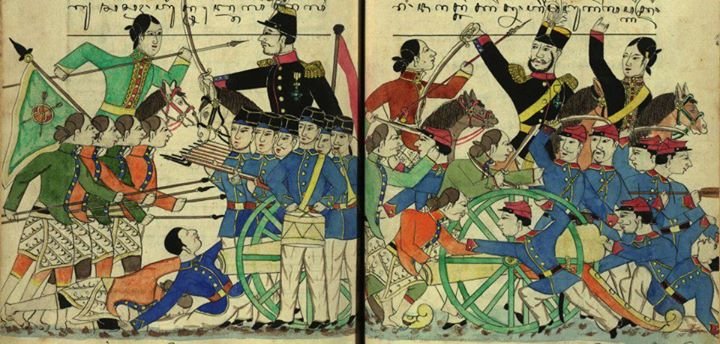
Java war illustration
There is an assumption about Javanese culture that I grew up with too: that we value alus — refinement, restraint, politeness and the avoidance of open conflict.
There is truth in it. But Jogja's history makes the stereotype more complicated.
In Tegalrejo, Pangeran Diponegoro spent part of his childhood and later became one of the most important figures in resistance to Dutch colonial power. When conflict erupted in 1825, his residence was attacked and burned. Diponegoro escaped with his followers and established Selarong as an early base for the Java War, which lasted until 1830.
Today you can visit the former Tegalrejo residence, associated with the Museum Monumen Pangeran Diponegoro. Standing there changes the way you think about the supposedly gentle city.
Being alus was never the same thing as being passive. Javanese culture developed ways of controlling anger, maintaining relationships and avoiding unnecessary confrontation. But when something fundamental was threatened — land, dignity, faith, political autonomy — resistance could take another form.
Jogja's history is full of that tension.
When Jogja became the Republic's home
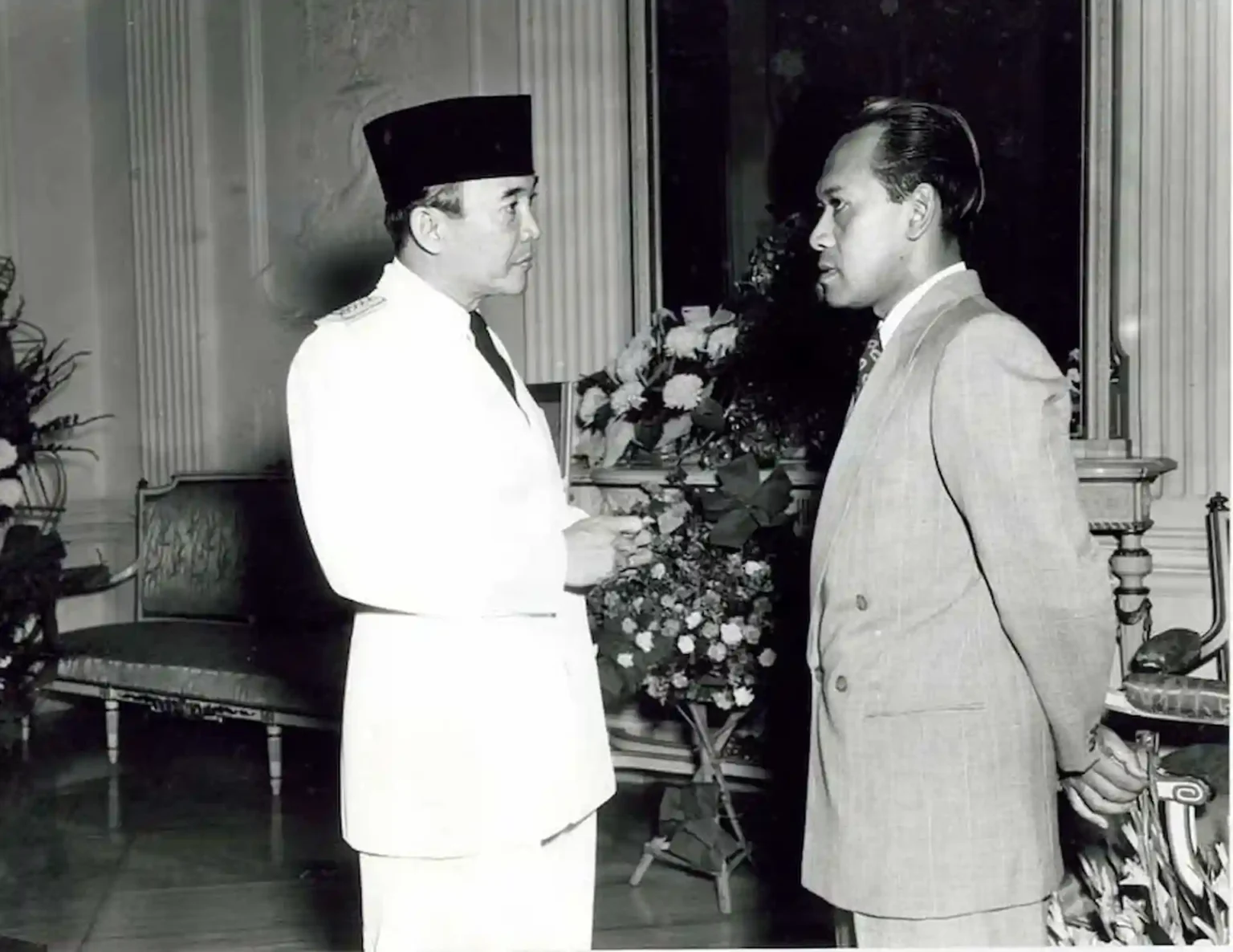
President Sukarno and Sultan Hamengku Buwono IX
Nearly a century later, the city became a different kind of centre of resistance.
After Indonesian independence, the Republican capital was moved to Yogyakarta on 4 January 1946. It remained the capital until December 1949, becoming the political and administrative centre of a young republic fighting to survive.
Gedung Agung still stands near Malioboro. The Kraton supported the Republic, while after the Dutch launched their second military aggression in December 1948 and captured the Republican leadership, General Sudirman left the city and continued the struggle through guerrilla warfare.
This is another layer I did not fully appreciate as a child. The city of gamelan and sacred royal ceremonies was also a city of political networks, guerrillas and resistance.
The next generation of resistance
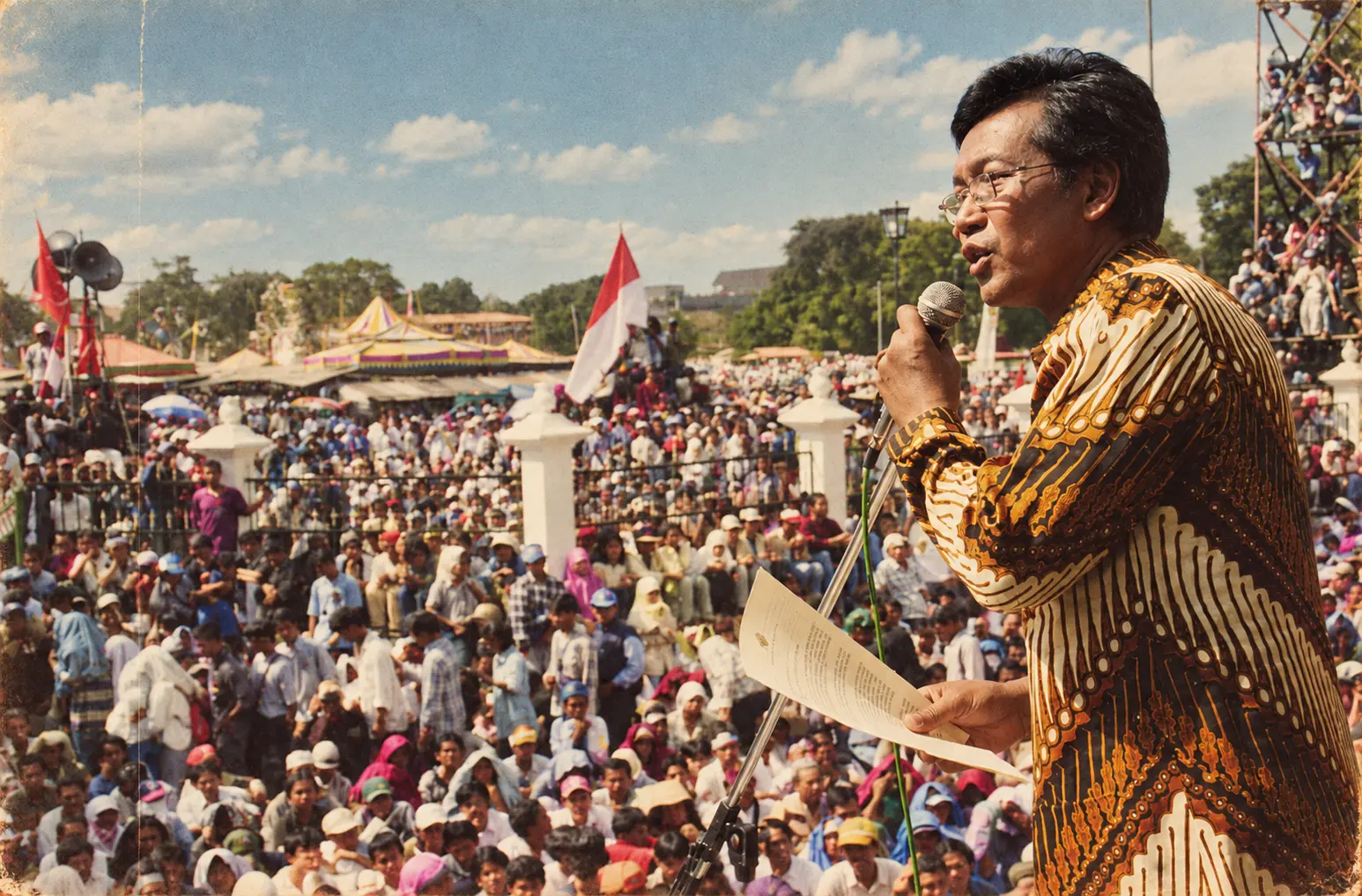
Sultan HB X addressing a rally crowd in May 1998
The fighting spirit did not disappear with independence.
Yogyakarta became a major student city, and its universities created another political landscape. At UGM, the Gelanggang Mahasiswa became a centre of student organising during the Reformasi movement of 1998. Demonstrations intensified through the spring, including actions around the UGM campus and Gejayan.
But the movement did not belong to students alone. On 20 May 1998, Sultan Hamengku Buwono X held a Pisowanan Ageng at the Kraton, drawing hundreds of thousands of people. He publicly expressed support for the Reformasi movement, turning an old Javanese tradition of the ruler meeting his people into a powerful expression of political change.
This part of the history is personal to me. My brothers were among the students who participated in the movement. So when I think about 1998, it is not simply something I learned later from history books. It belongs to my family memory too—to the stories of that generation, the uncertainty, the anger and the feeling that something in the country had to change.
It is strange to place that beside the Jogja I know from childhood: gamelan rehearsals, traditional ceremonies, nembang, the quiet manners of older people. But the contradiction is the point. The same city can produce people who bow respectfully before an elder and march for political change—and, in 1998, even the Kraton became part of that movement.
Learning to be alus
Javanese ideas such as tepa selira — considering how your actions affect others — and rukun, the ideal of social harmony, remain important to everyday life. So does gotong royong, the instinct to work together for the benefit of a community.
These values should not be romanticised. Jogja is not a perfectly harmonious place. It has inequality, conflict, political disagreements and all the ordinary problems of a growing city.
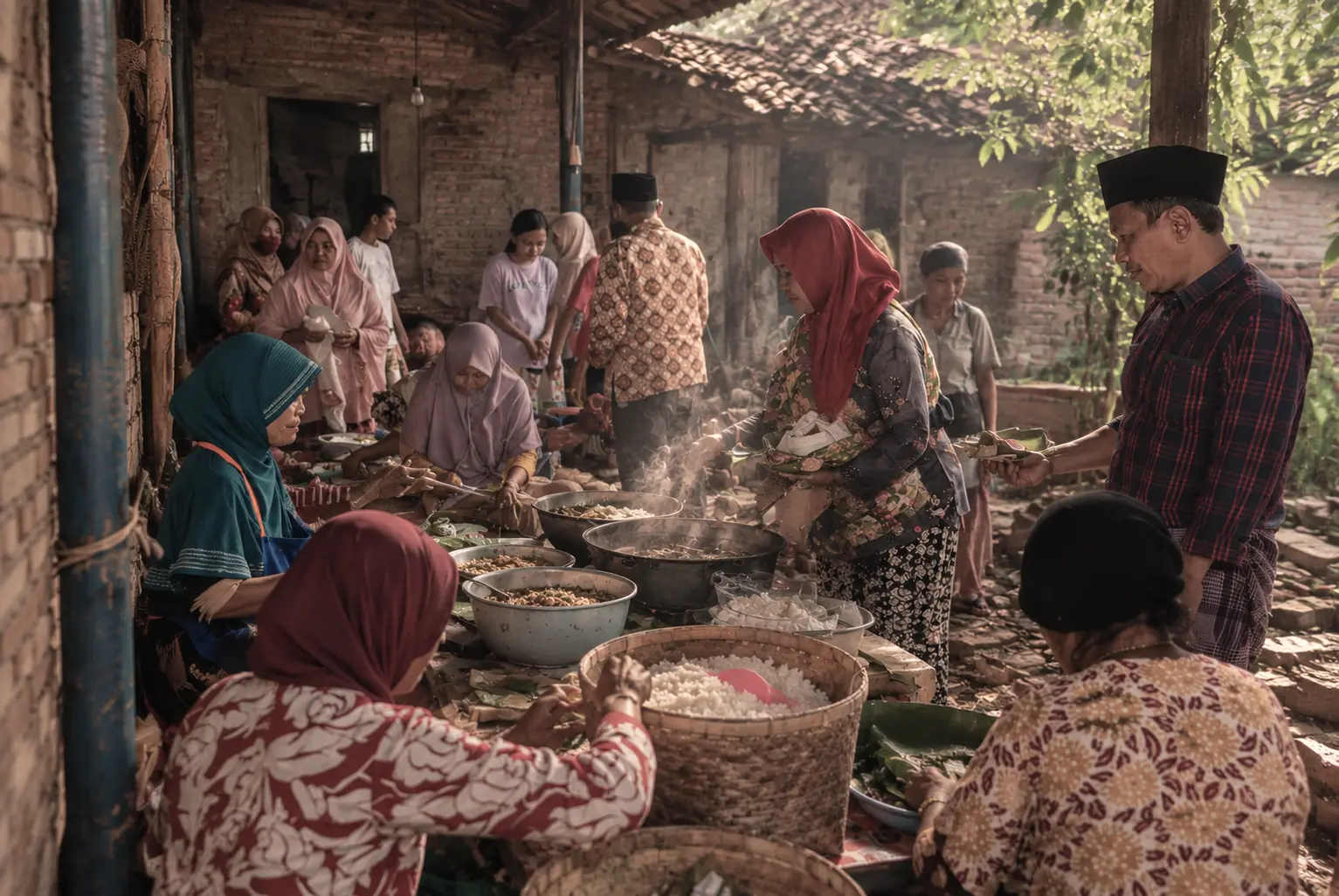
Rewang, when neighbours gather to cook together for a celebration
But the social instinct remains. A neighbour helps prepare food for a wedding. People gather when someone dies. Residents organise a community project together. An older person is greeted with respect. Someone gives directions to a lost traveller with such patience that you wonder whether they might actually walk you there.
Jogja's friendliness is rarely theatrical. It tends to arrive quietly. There is strength in that quietness too.
The city that makes room
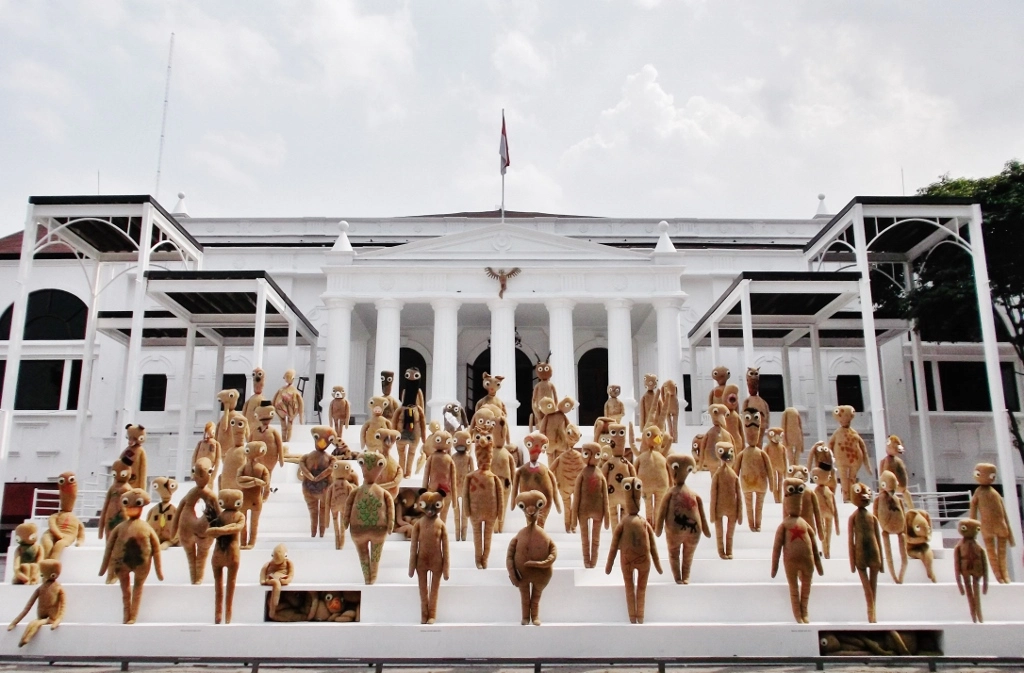
ArtJog annual contemporary art exhibition | source: artjog.co.id
For all its deep roots, Yogyakarta has always had room for people who came from elsewhere.
Dutch artist Mella Jaarsma arrived in Indonesia in the 1980s and has lived and worked in Yogyakarta since 1984. She studied at ISI and later co-founded Cemeti Gallery, which became an important space for contemporary art in the city.
Artists, writers, students and travellers continue to arrive because Jogja offers something unusual: tradition without requiring everyone to remain traditional.
You can study Javanese philosophy here and make experimental art. You can live near the Kraton and spend your evenings in contemporary galleries. You can come from another country and, after enough time, become part of the city's story.
That is why the city has always felt more spacious to me than its physical size suggests. It has roots, but it gives room.
A place you can leave and still belong to
When you grow up somewhere, you notice what is changing before you notice what endures. You complain about traffic, notice new cafés and buildings, and remember the shop that used to stand on a particular corner.
Then you leave.
Suddenly, the smallest things become precious: the sound of someone speaking Javanese, the taste of gudeg, an elderly person saying monggo, the afternoon light on an old wall, the distant sound of gamelan travelling through a kampung. These things become coordinates. They tell you where you are.
That, I think, is what roots really are. Not an instruction to stay in one place, but a collection of memories capable of guiding you back.
I have travelled far enough to know that there are many beautiful cities in the world. Some are faster, grander or more spectacular. But beauty is not the same thing as belonging.
Yogyakarta has never needed to impress me. It already knows me. My family is still here. My mother is still teaching. Somewhere, children are still learning gamelan, nembang, dance and the quiet manners of their elders. Somewhere else, students are still arguing about the future, artists are making something nobody has seen before, and a neighbourhood is gathering around a gamelan set that belongs to everyone.
That is the Jogja I recognise: a city of palaces and protests, rituals and revolutions, restraint and resistance. A city that has been divided, occupied, fought over and reinvented, yet continues to make room for people to call it home.
That is why, after all the places I have travelled through, Jogja still feels the most like home. Not because it has stayed the same, but because beneath all its layers, I can still recognise the place that taught me who I was.
CONTRIBUTOR / STORY AUTHOR
DETI LUCARA
WWC-26-000010Yogyakarta, Indonesia
Travel writer and founder of Where We Crossed, documenting places, people, and stories through slow travel.
COMMENTS & REFLECTIONS
0 Comment(s)WANT TO JOIN THE CONVERSATION?
Sign in with your member passport to share your reflections on this archive.
No reflections recorded yet. Be the first to share your thoughts on this story.