
STORIES > NETHERLANDS > ROTTERDAM > ARTICLE
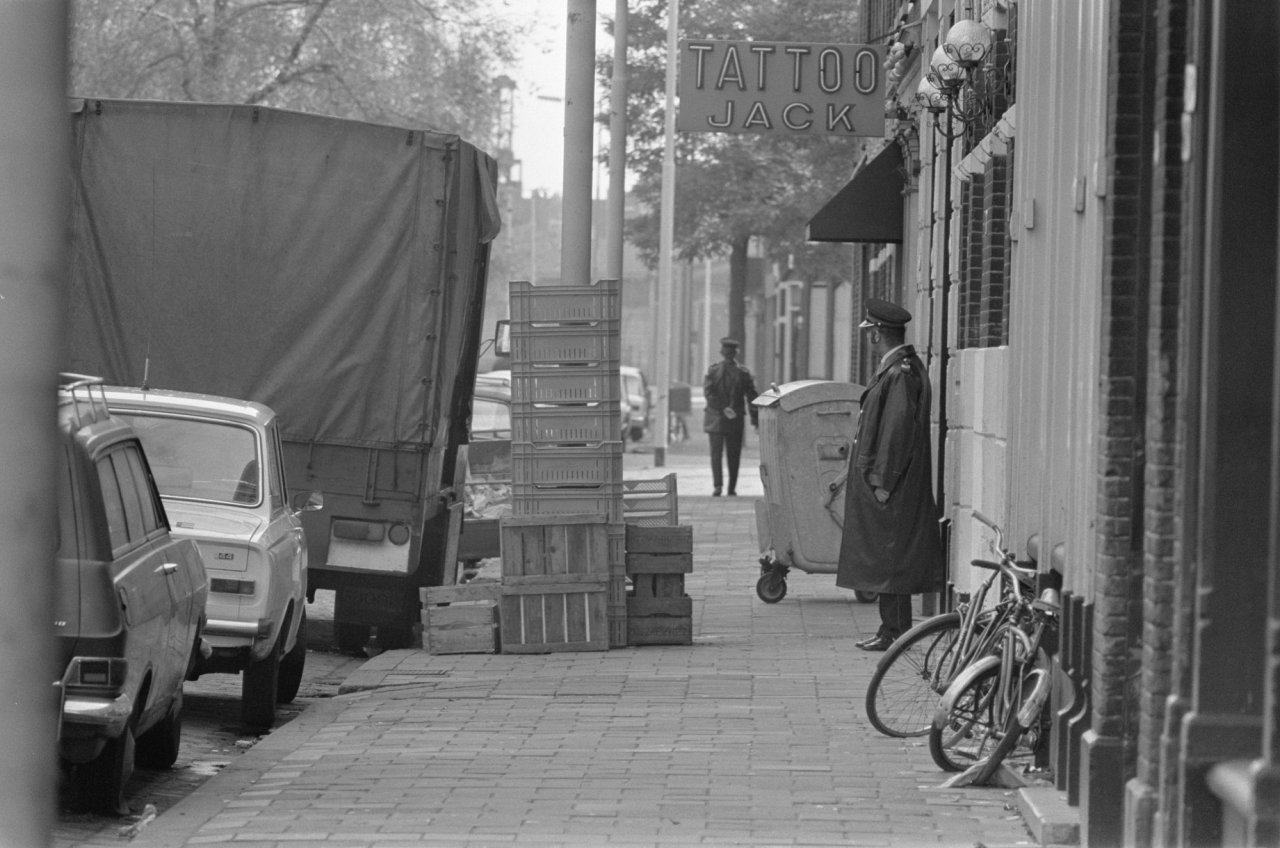
KATENDRECHT: THE NEIGHBOURHOOD THAT HID IN PLAIN SIGHT
Once Rotterdam’s rough sailors’ quarter, Katendrecht became a home for Chinese migrants, jazz musicians and people seeking refuge during the war. Today, its hidden histories linger beneath the polished new neighbourhood.
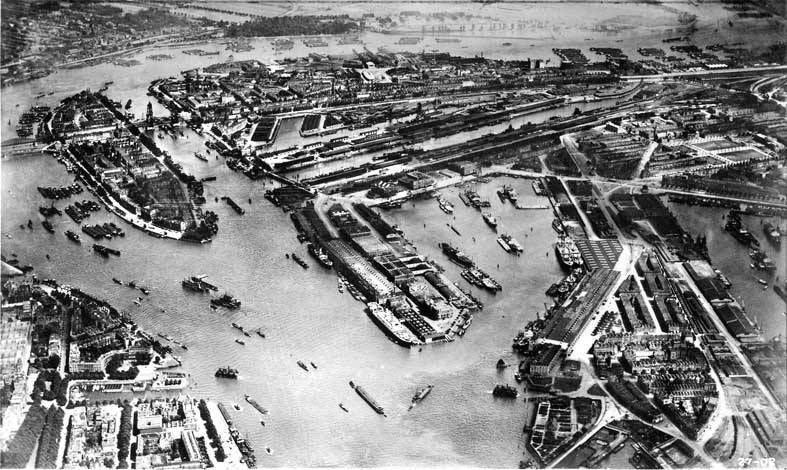
Katendrecht Peninsula | Courtesy of the City of Rotterdam
The first time I really began to notice Katendrecht, I was standing inside Fenix museum, surrounded by stories of people who had left one place and arrived somewhere else. The building itself seemed to carry that idea: an old harbour warehouse transformed into a museum about migration, with the Maas just beyond it and Rotterdam rising across the water.
I had come to see the exhibitions, but what stayed with me was the feeling that this particular piece of the city had always been about people in motion.
Later, at Verhalenhuis Belvédère, the story became more intimate. The old building is filled with photographs, family histories and objects connected to Katendrecht's past. Among them, I encountered the story of David Zee, whose family was part of the Chinese community that took root here more than a century ago.
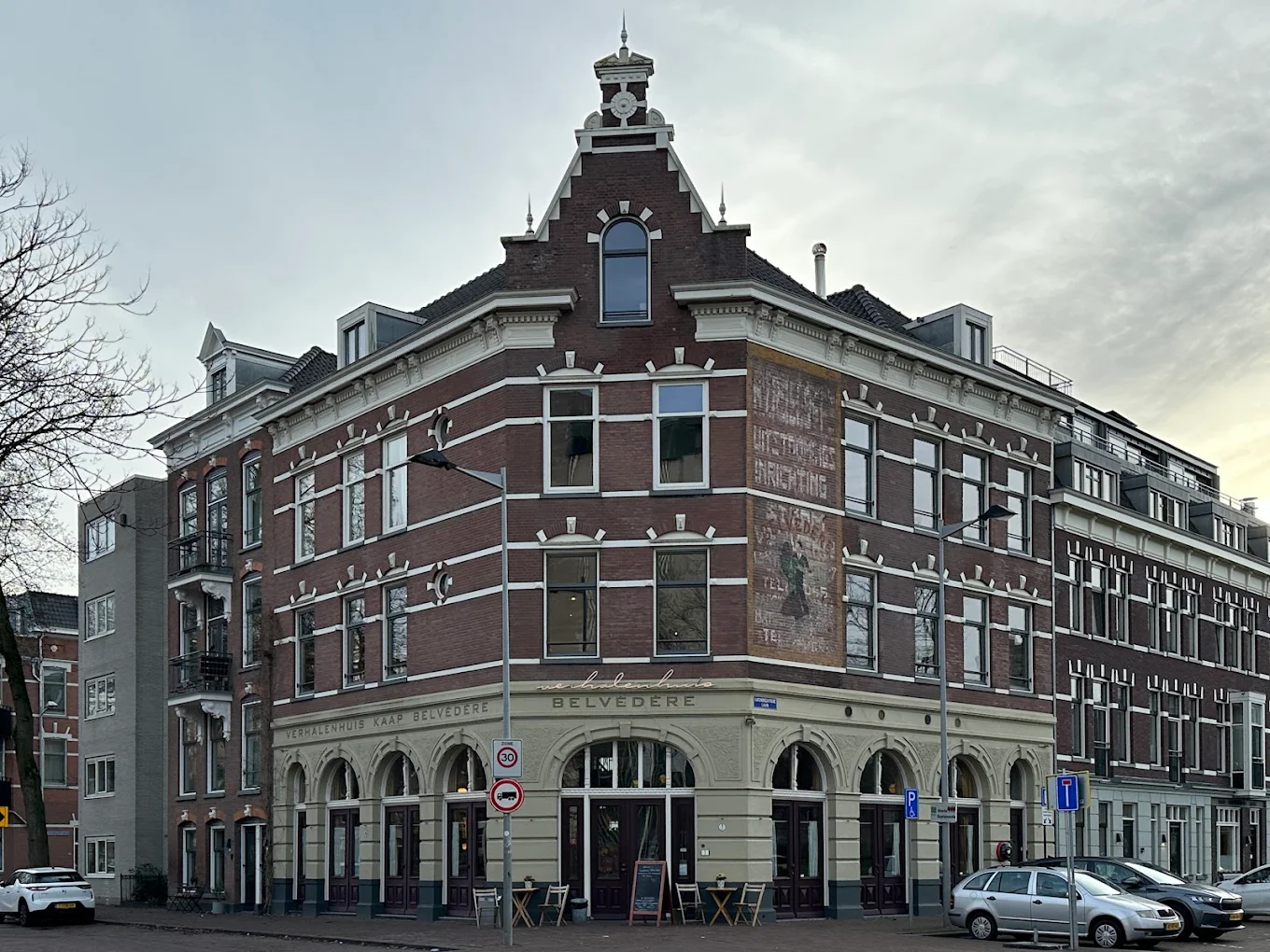
Verhalenhuis Belvédère
Today, the peninsula feels creative, polished and increasingly residential. Restaurants fill old harbour spaces, new buildings rise around historic warehouses, and Fenix has become a cultural landmark. But beneath that contemporary surface is a much rougher history: sailors coming ashore, Chinese migrants building lives far from home, cafés and dance halls, gambling houses and prostitution, and, in the shadows of the boarding houses, rooms where opium was smoked.
It is tempting to make the opium dens the most mysterious part of the story. But the more I learned, the more they seemed like only one layer of a much larger story about migration, survival, belonging and, during the war, an unlikely kind of refuge.
The Kaap at the edge of the city
Katendrecht was once a quiet polder village. Its transformation began when Rotterdam annexed it in the late nineteenth century as the expanding port needed more land. The Rijnhaven and Maashaven were excavated around it, turning Katendrecht into a peninsula surrounded by working harbour waters. The nickname De Kaap — the Cape — suited its new geography.
Then came the sailors.
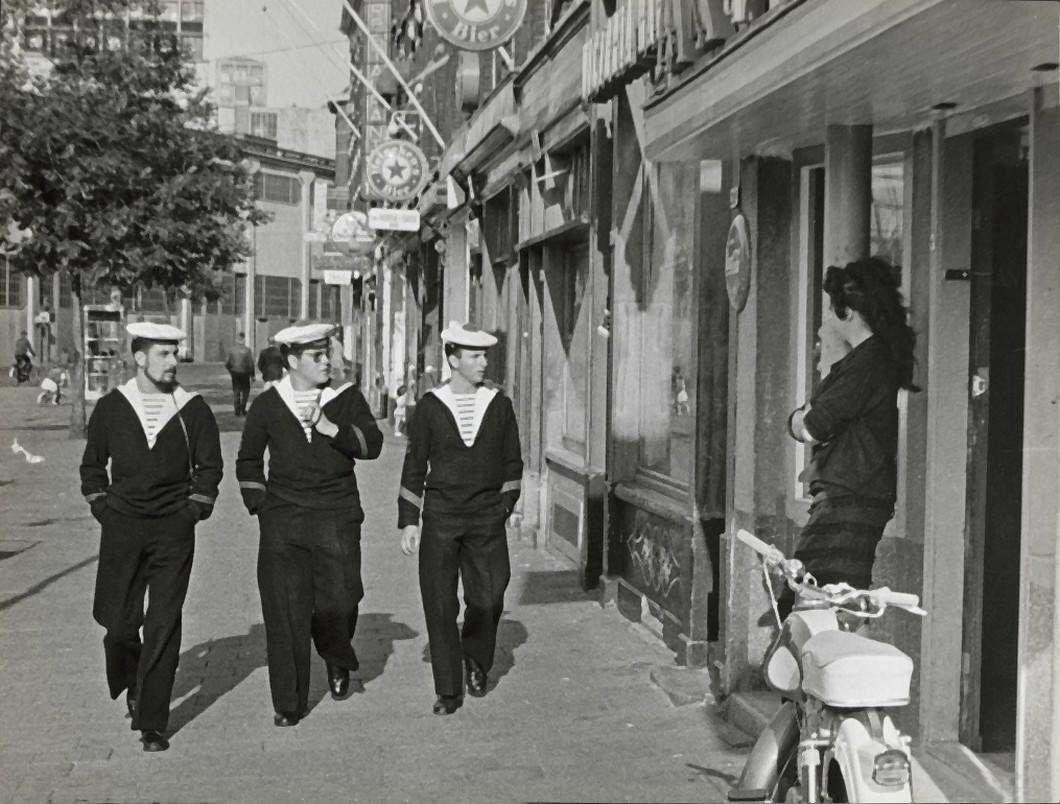
Sailors in Katendrecht | Source: the City of Rotterdam
In 1911, during a major seamen's strike in Rotterdam and Amsterdam, shipping companies brought Chinese workers from Britain to break the strike. More Chinese sailors followed, and Katendrecht became their home while they waited for ships or looked for work.
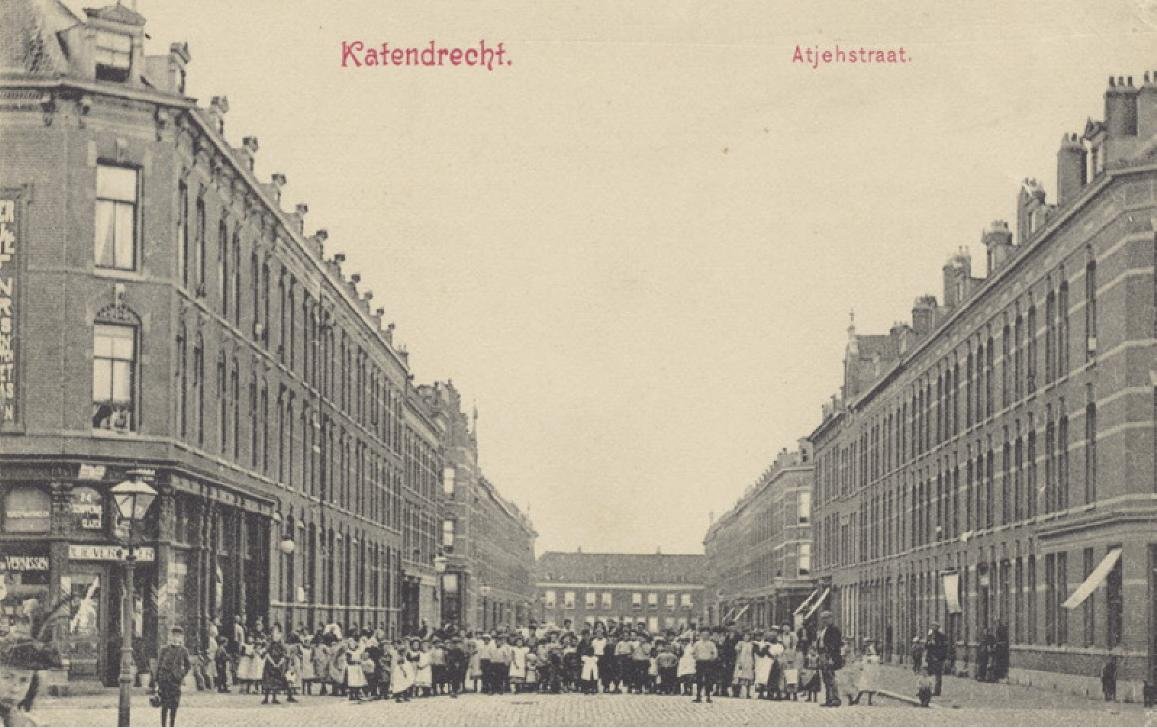
Atjehstraat | Source: the City of Rotterdam
Boarding houses appeared along streets such as the Delistraat, together with shops, restaurants and social clubs. By the 1920s, Katendrecht had developed into Europe's first Chinatown, with a dense network of businesses serving the seafaring population.
The conditions were rarely comfortable. Many Chinese sailors lived in inexpensive boarding houses, often crowded into a neighbourhood already associated with transient workers and nightlife. During the economic crisis of the 1930s, many lost their work and were left with little support.
David Zee has spent years reconstructing this history through his own family. His grandfather was among the early Chinese sailors to settle on Katendrecht, and Zee grew up there in the 1960s. In an interview, he described the history of the Chinese community as a “pretty shocking history,” particularly because so little of it was known outside the community.
His family story makes that history harder to keep at a distance.
The boarding houses
The Chinese boarding houses were more than places to sleep. For sailors arriving from overseas, they offered somewhere to stay between voyages, while around them grew shops, restaurants, gambling houses and meeting places.
The first Chinese restaurant in the Netherlands, Chong Kok Low, opened on Katendrecht in 1922.
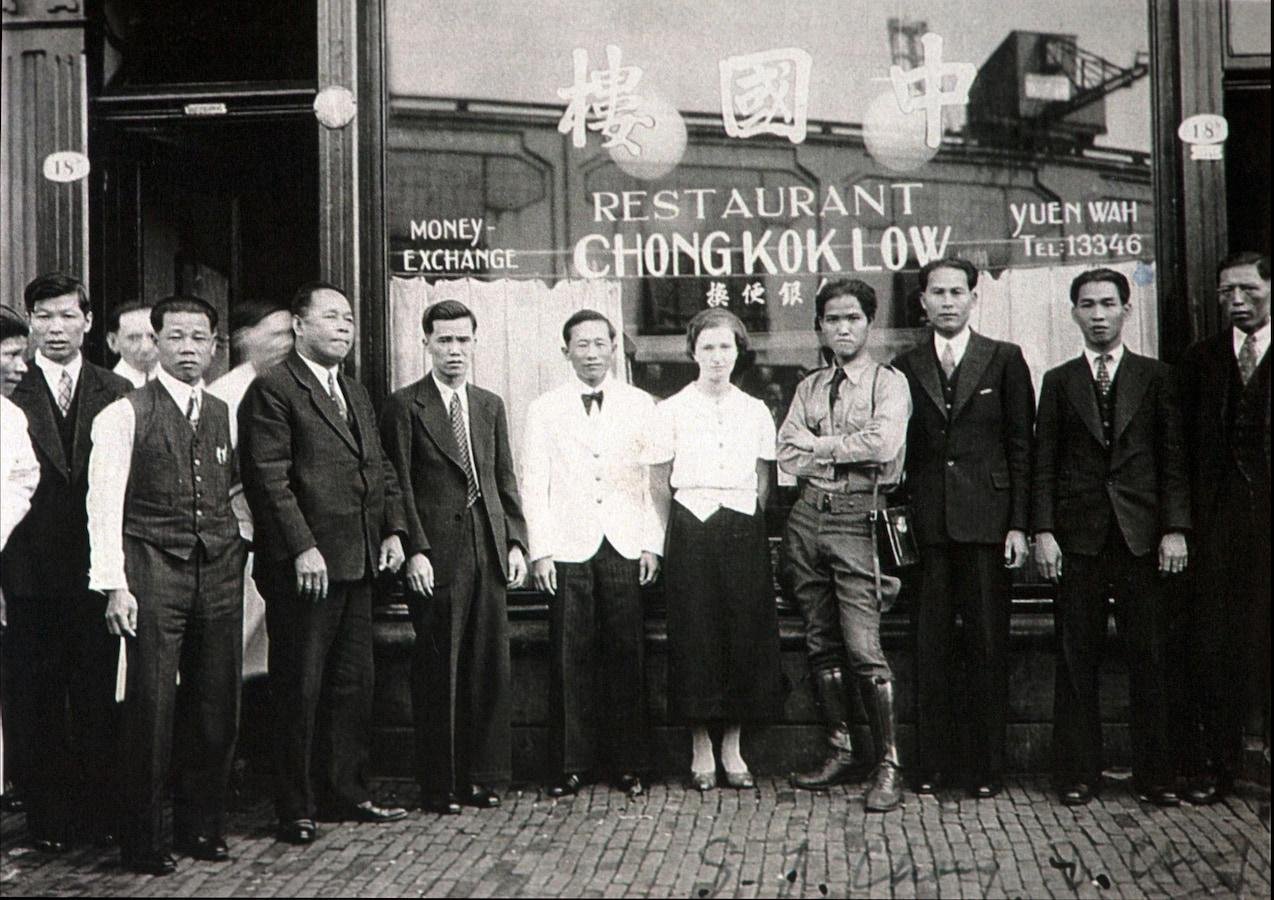
Chong Kok Low, the first Chinese restaurant in Rotterdam | Source: the City of Rotterdam
David Zee's family was closely connected to this world. His grandfather worked in the kitchen of Chong Kok Low and later married a Dutch woman, Neeltje Kraaijeveld. Their relationship caused a scandal in a society where interracial marriage was deeply contested. Dutch authorities eventually stripped Zee's grandmother of her Dutch citizenship, and their children were registered as Chinese citizens despite being born in Rotterdam.
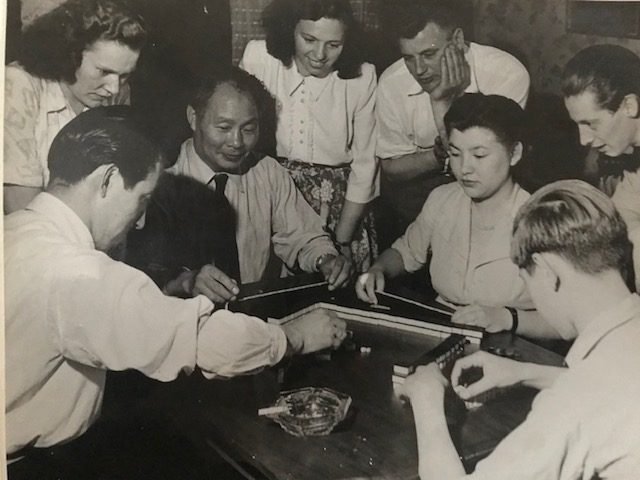
Zee family at Verlaan 48 playing a mahjong game. On the left, David, his uncle Cornelis “Chinese Kees” Zee, in the middle, his grandfather Ah Say (his nickname), and on the right, his aunt Diana. 1947 | Source: asiansraisins.nl
It is difficult to reconcile that history with the multicultural Rotterdam we see today. But the diversity of Katendrecht was not created by a policy designed from above. It grew from people who arrived because the port needed them, stayed because they found work or community, and gradually made a place for themselves.
Where the opium came in
And then there were the opium dens. The phrase immediately conjures a certain image: dark rooms, smoke hanging in the air, sailors disappearing down narrow staircases. The reality was more complicated.
Opium smoking did exist in Chinese boarding houses, particularly in cellar rooms, and some sailors became dependent on it as they struggled with the harsh conditions of their lives. A 1938 painting by Rotterdam artist Dolf Henkes depicts this world, while a surviving opium pipe confiscated by Rotterdam police on Katendrecht in 1930 offers a tangible reminder that these places were not simply the stuff of later legend.
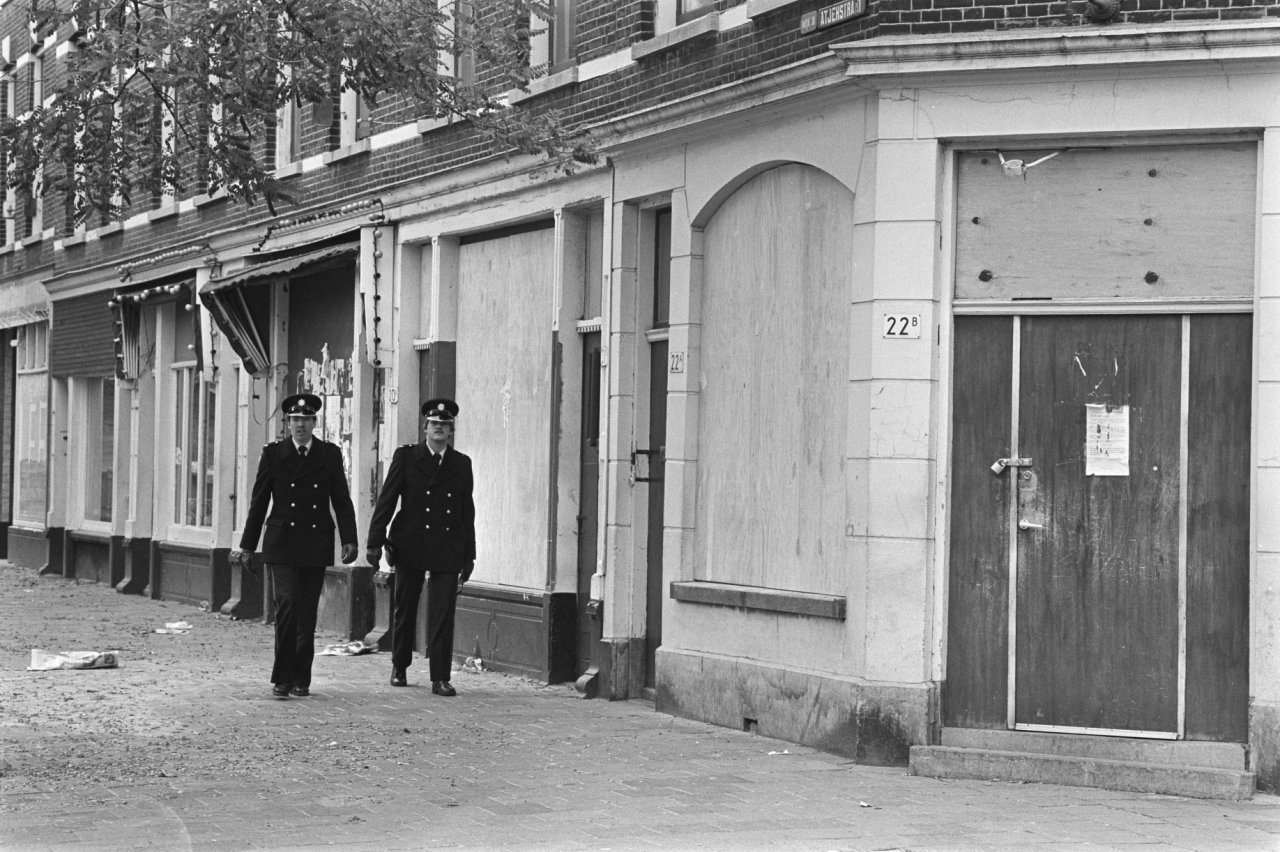
Opium police unit, circa 1928 | Source: The City of Rotterdam
The Dutch government's relationship with opium was complicated too. Recreational use was prohibited from 1919, but enforcement within the Chinese community was inconsistent. Rotterdam established a small opium police unit in 1928, yet smoking was sometimes tolerated in practice because enforcing the law against every user could have meant arresting a significant part of the Chinese population.
This is where the mythology of the “opium den” can become misleading. The dens were real, but they existed within a much larger world of migration, labour and survival. A boarding house could contain a bedroom, a shop, a gambling room and an opium room, all within the same community.
Katendrecht's reputation was already complicated. The war would make it stranger still.
The unlikely sanctuary
During the German occupation, Katendrecht acquired another identity.
The Wehrmacht was prohibited from entering the peninsula. The reason was rooted in the German military's fears surrounding prostitution and venereal disease, as well as Nazi racial policies. German soldiers were forbidden from entering the area where prostitution was concentrated, and signs marked the peninsula as off-limits.
The consequence was unexpected. In an occupied city where German control was everywhere, Katendrecht became a place of relative safety.
It was never completely safe. German authorities still carried out inspections, and people could still be arrested. But the absence of regular Wehrmacht presence created a degree of freedom that was unusual in wartime Rotterdam.
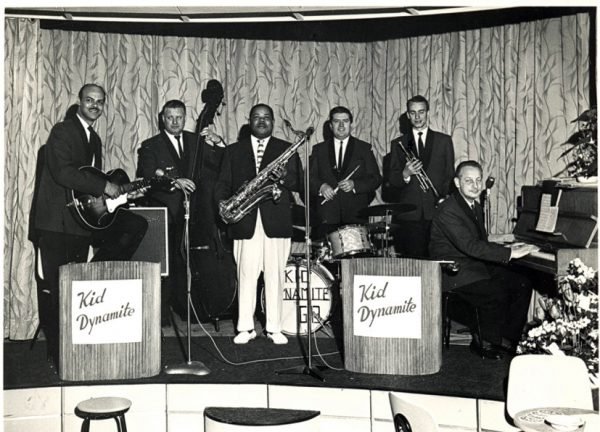
Kid Dynamite | Source: Nederlands Jazz Archive
Jazz musicians found one such space. Jazz had been banned by the Nazis, yet at Belvédère on Katendrecht, musicians including Kid Dynamite, Teddy Cotton and Boy Edgar continued to perform. The club became a remarkable pocket of musical freedom during the occupation.
The sanctuary did not last. In 1943, Teddy Cotton was attacked during a German raid and subsequently received a playing ban. By the end of that year, Belvédère was closed. Yet music was only part of the story.
Jewish residents and people in hiding also found Katendrecht comparatively useful because German soldiers were generally kept away from the area. Historical records describe Jewish families living there during the first years of the occupation, while the relative absence of German military personnel made the neighbourhood more difficult to control in the same way as other parts of Rotterdam.
At Belvédère, the story becomes even more remarkable. Rotterdam artist Wally Elenbaas and his Jewish wife, photographer Esther Hartog, lived in the building and were active in the resistance. The building was also used to hide Jewish children during the war.
The same neighbourhood known for sailors, prostitution and opium had become a place where forbidden music could survive, resistance activities could take place, and people persecuted by the Nazis could sometimes find shelter.
That is one of Katendrecht's great historical ironies. The reputation that made the neighbourhood undesirable to German soldiers helped make it useful to people who needed somewhere to hide.
A neighbourhood of contradictions
This may have been Katendrecht's defining characteristic all along.
It was a Chinese neighbourhood, but also a Dutch one. A working-class district, a sailors' quarter, a red-light district, a place of migration, entertainment and addiction. During the occupation, it became a relative refuge almost by accident.
David Zee remembers another side of it.
Speaking about his childhood, he recalled that children from different backgrounds played together and moved easily between one another's homes. “For us was everyone equal,” he said, describing the social cohesion he experienced growing up on Katendrecht.
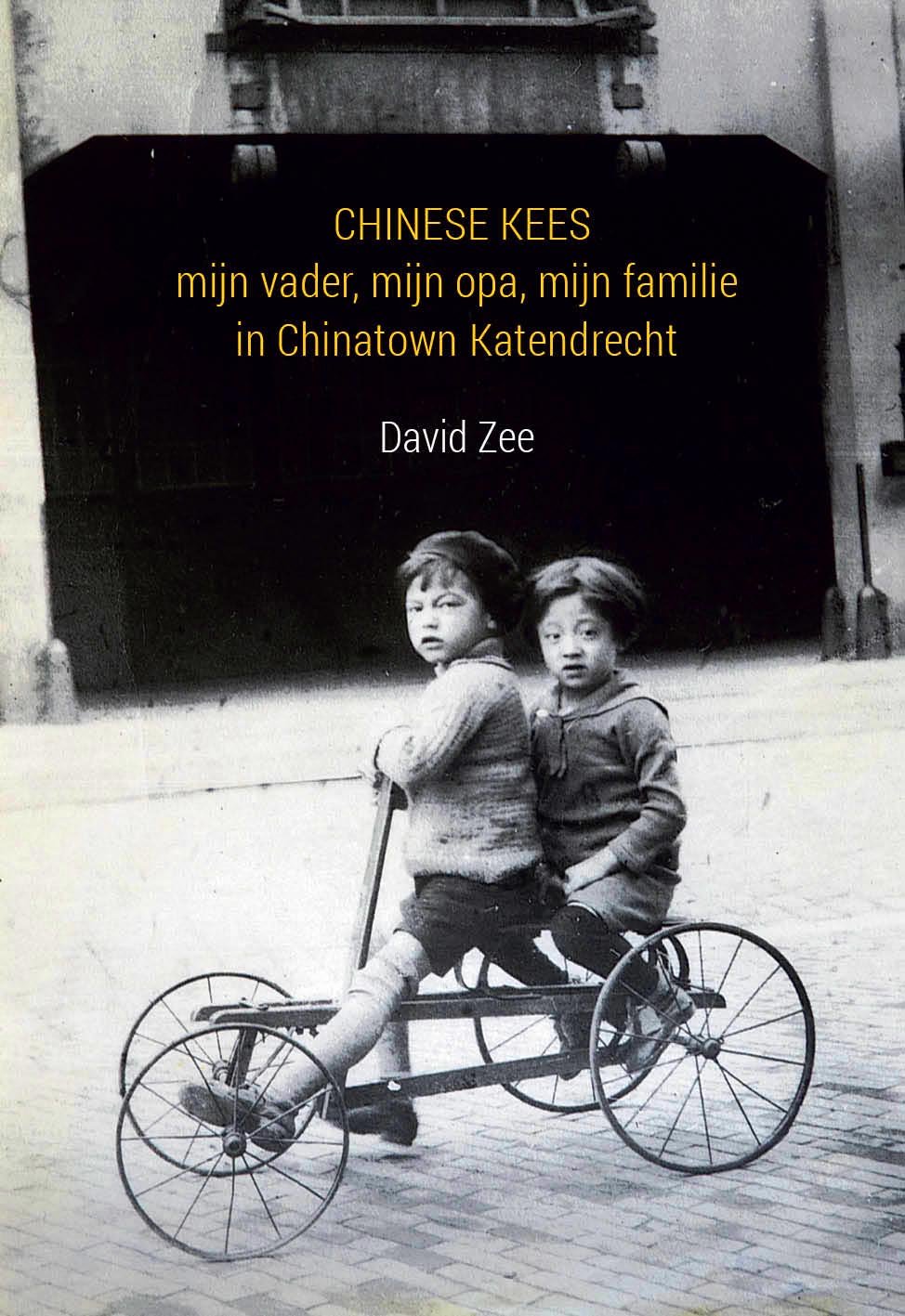
Source: David Zee's collection
That sentence stayed with me because it complicates the image of the dangerous Kaap. The adults might have been dealing with poverty, prejudice, prostitution, gambling and addiction. But children were simply growing up together.
History rarely fits neatly into the labels we give a neighbourhood.
Walking through it today
After visiting Fenix and Verhalenhuis Belvédère, I found myself looking for the places that no longer announce themselves.
There are no dramatic signs saying, This was an opium den.
The old world has mostly disappeared beneath cafés, restaurants, apartments and cultural spaces. The Delistraat still exists, but the boarding houses and businesses that once filled it have largely gone.
What remains is the street plan, a few older buildings, photographs, stories and the knowledge that ordinary-looking façades once contained an entire world.
That is why Verhalenhuis Belvédère feels so important. Rather than turning Katendrecht's past into a spectacle, it gives people a place to tell it. David Zee's family photographs turn a broad historical subject — Chinese migration to Rotterdam — into something recognisably human: a grandfather, a father, a family and a neighbourhood.
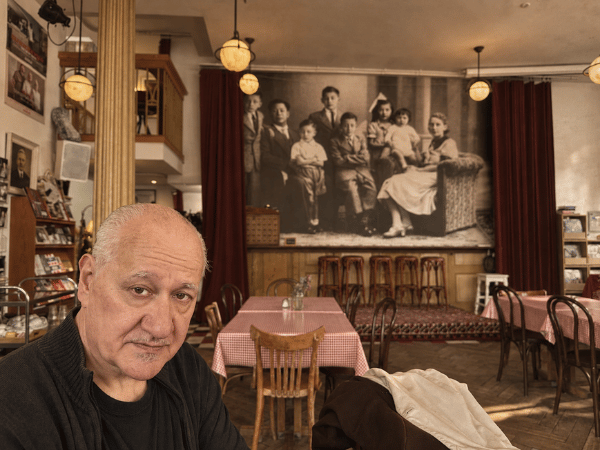
David Zee with background of his family's photo at Verhalenhuis | Source: Verhalenhuis Belvédère
Fenix does something similar on a larger scale. Its migration stories connect Katendrecht to the wider world, reminding visitors that Rotterdam's history has always been shaped by people arriving from somewhere else.
But the transformation of Katendrecht also raises a quieter question. What happens to the older stories when a neighbourhood becomes desirable?
The ghosts beneath the new Katendrecht
Walking through Katendrecht today, I found myself noticing how ordinary everything looked. The Delistraat is still there, but the boarding houses, cafés and old businesses have largely disappeared. In their place are restaurants, apartments and renovated harbour buildings.
That contrast stayed with me as I walked back toward the Maas. A neighbourhood can change almost completely and still carry traces of the people who once lived there. Sometimes all that remains is a street name, an old photograph, a building, or a story someone decided was worth remembering.
For me, that is what made Katendrecht worth exploring beyond its reputation as an old sailors' quarter or the home of opium dens. Its history is not preserved in one grand monument. It survives in fragments, scattered across the peninsula.
At Fenix, those fragments become stories of migration. At Verhalenhuis Belvédère, they become family memories. Along the old streets of De Kaap, they are harder to see.
Perhaps that is why the neighbourhood has stayed with me. Katendrecht does not reveal its past immediately. You have to look twice.
And sometimes, the most interesting parts of a city are the ones that are still hiding in plain sight.
CONTRIBUTOR / STORY AUTHOR
DETI LUCARA
WWC-26-000010Yogyakarta, Indonesia
Travel writer and founder of Where We Crossed, documenting places, people, and stories through slow travel.
COMMENTS & REFLECTIONS
0 Comment(s)WANT TO JOIN THE CONVERSATION?
Sign in with your member passport to share your reflections on this archive.
No reflections recorded yet. Be the first to share your thoughts on this story.